What Fandom Racism Looks Like: PickMe POC

When I used to be on Tumblr, I’d get a lot of messages and reblogs from people who made it a point to let other people know that I didn’t speak for all POC.

I was never arguing that I did, of course, but it was imperative to these other people of color to let me and white people in fandom know that they were here, they weren’t white, and that they thought I was full of shit about fandom racism. 

Which is their right as people on the internet, let’s be real here. 

But it’s interesting:

I, a queer Black person with most of a lifetime in fandom and an entire academic career focusing on media criticism and representation, couldn’t possibly speak for every single person in fandom when I talked about racism I witnessed in fandom… but they could speak over me in order to let other people in fandom know that I was a POC Not To Be Trusted.

“Pick Mes” have a home on the internet. It’s a term borne from African American Vernacular English (AAVE) that calls to mind the mental image of people jumping up and down and begging to be picked for a game. (“Pick me! Pick me!”) Only, in the usual context, it’s someone leaping up and down and trying to get the attention of someone that treats them with disdain. 

Read More »

Queer Baiting, Coding, Reading, and Representation: A Pint-Sized Primer

Queer4 Header 2.png

This is a pint-sized primer about the differences between queer representation, queer coding, queer reading, and queer baiting because I wanted to have something small to keep around and kind of… wave it at folks that want an easy way to know the difference.

This is literally the simplest I could make this (because I’ve got dense academic brain) and so it skims over a lot of crunchy academic writing to make its points and be as clear as possible.

If you want more in-depth texts or conversations about this, I personally love the late Alexander Doty’s work along with Harry Benshoff’s Monsters in the Closet, but there are a bunch more academics and whatnot writing about this in media fandom and related academic fields. I’d be happy to point y’all in the related directions.


Read More »

What Fandom Racism Looks Like: Misogynoir – Introduction

wfrll - misogynoir - intro

The most disrespected woman in America, is the black woman. The most un-protected person in America is the black woman. The most neglected person in America, is the black woman. – Malcolm X, from a speech he gave May 5, 1962 at the funeral of Ronald Stokes.

Fandom hates Black women – real and fictional.

Fandom can’t stand Black female characters, the actresses that play/voice them, or the Black women who go hard for characters that look like them.

Misogynoir is alive and well in fandom spaces and few people seem willing to acknowledge it or listen to Black women talking about this specific form of racialized misogyny in fandom.Read More »

Fleeting Frustrations # 2: Fan Studies, Like Fandom, Isn’t the Best About Race

20181018_115854.jpg
Most, but not all, of these books were a product of my attending PCA 2017 and sweeping the book dealer’s room right before closing… This isn’t even all of my collection.

I am grateful to fan studies scholars for giving me a name for what I’d been doing before I ever knew that fan studies was a thing. I love fan studies as an academic discipline and I wish that it wasn’t seen as that slight a niche. Fandom is huge and fans are everywhere, so the fact that fan studies as we know it isn’t a bigger and more popular discipline – and that’s the fault of the general academic powers that be crawling slowly towards recognizing it as a wide-reaching discipline that can mesh with other academic avenues, I’d say – is ridiculous.

I could literally go on for ages talking about my favorite aspects of fan studies or the fan scholars that inspire my own work because there’s a lot to love about this discipline. However, this is the second installment of Fleeting Frustrations so let’s save the love-in for a later post. Right now, it’s time to air my biggest grievance with fan studies as a whole – but specifically the parts of fan studies that focus on the identity of fans and their favorite characters or ships.

Fan studies, despite frequently focusing on or having texts written by marginalized people, isn’t exactly great at intersectionality or recognizing that intersectional feminism is a must especially when your fan studies focus lands on gender and sexuality.

Read More »

Sacrifice, Heroics, and Dead Characters of Color

This post contains spoilers for Orange is the New Black season 4, Wynonna Earp season 3, Elementary season 6, Agents of S.H.I.E.L.D. season 5, and a bunch of other stuff that’s been off the air or out of theaters for years.


sacrifice-and-heroics

I knew I was never going to watch Sleepy Hollow again when Nicole Beharie’s Abbie Mills sacrificed herself in a heroic death for Tom Mison’s Ichabod Crane at the end of the series’ third season.

When I saw spoilers that Orange is the New Black’s Poussey was killed off in a tasteless and traumatizing scene that called back to Eric Garner’s murder by a police officer four years ago – and the folks in fandom defending it as something that “had” to happen – I immediately took the show out of my Netflix queue.

And, every time a person of color dies so the Winchester brothers can live, I wonder why I even kept the show around as an afternoon marathon session.

Heck, not only did I think I’d have to say some pretty sharp words to Rian Johnson during the climax of The Last Jedi where he had Finn set up to kill himself in order to (possibly) save the dregs of the resistance, but to this day I block everyone I see on social media that wishes for Finn’s death by redemption arc – or suggest that his death would have somehow “saved” his character from being boring.

And now, Wynonna Earp has followed in the footsteps of these shows by killing off the main Black character Xavier Dolls (played by Shamier Anderson) in the third season’s second episode (“When You Call My Name”) and the fandom and crew alike don’t seem to get why that’s such a big problem.Read More »

[Patreon Preview] Stitch Talks Tropes

I’ve been sitting on this for a couple of weeks as I planned, and now I think I’m ready to share a preview of something I’ve been working on and planning for almost all of June: Stitch Talks Tropes (Or, possibly, Talking Tropes) will be a half-hour long, monthly podcast-y series where I talk about tropes in the media we love.

I’m planning on talking tropes in romance novels, urban fantasy, science fiction, and fandom spaces. Some of these tropes will be ones we love and always will. Others will be tropes that are problematic and need a little subversion. And at the end of every episode, there’ll be a recommendation for at least one work (published fiction or fanwork) that displays a trope I think is positive or subverts a problematic trope.

So here’s what you need to know about Stitch Talks Tropes/Talking Tropes:

  • Will be Patreon-exclusive at the $5 Tier (with articles being written and posted on my website once 6 or more episodes are completed, providing a likely six-month delay between what Patreons get and what my website readers get).
  • Won’t have transcripts until I can afford to pay for transcription services, but hopefully that will be soon.
  • The first three episodes are already planned out
  • All of the episodes will have a header image because those are cute
  • Each episode will likely be about 25-30 minutes of audio
  • And at least one recommendation related to the trope will be provided at the end of every episode
  • I’ll hold polls and ask for feedback for future episodes.
  • The first episode will release sometime during the second week of July

If you’re interested in hearing me analyze the tropes we love or loathe (and really want to support an unemployed writer of color), please consider signing up to be a patron at the $5 Tier today!

Patreon, folks.

[Small Stitch Reviews] May 21st

Whatever for Hire Cover.jpg

Whatever for Hire by R. J. Blain

A paranormal romance novel with jokes everywhere and a minor enemies-to-lovers relationship between the main characters, what makes Whatever For Hire fall flat for me is the copious use of the g-slur. Yes, that g-slur. The main character Kanika is half-Egyptian and half-Rromani (but also, maybe not even that considering the hints that the literal devil kept dropping), but did this book have to be rife with the g-slur being dropped willy nilly all over the place on top of Orientalism out the butt? (Aside from Kanika, all of the Egyptian characters were evil, teenager-selling, forced-marriage-having assholes so… problem much?)

Whatever For Hire could’ve been decent but instead, it was kind of a mess where the little moments that I disliked wound up adding up fast.

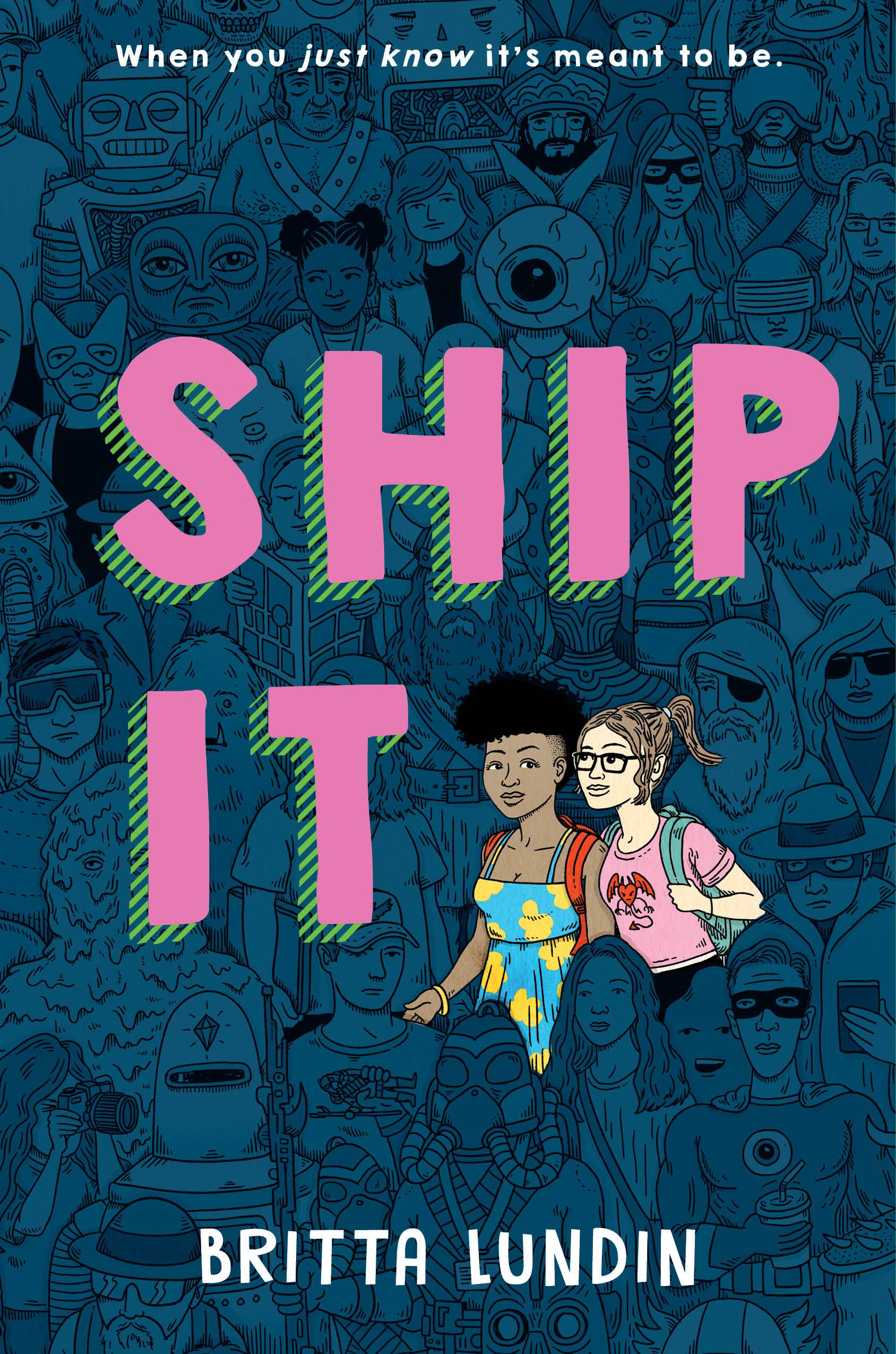
Ship It Cover.jpg

Ship It by Britta Lundin

Ship It, as you can tell from the title, is about shipping and fandom. It’s about Claire, a teenager who watches a Supernatural-esque primetime drama and ships the main characters. When she actually gets a chance to talk to one of the two leads on the show at a convention, things go pear-shaped when she brings up shipping and representation and he kind of… doesn’t react well.

I know a lot of people that liked Ship It in my group of fandom nerds who also read young adult fiction. I wanted to like it too. I even requested it on NetGalley because I thought it’d be amazing.

Unfortunately, I couldn’t get into Lundin’s debut novel even though I tried my hardest. I’ve been stalled at 40% for a few weeks now and while I might eventually return to it, right now I’m not that into the portrayal of fandom or fans. While Lundin’s writing is fun and full of snappy banter between the characters, I found it incredibly difficult to care about most of them or what they were going through.

I also, honestly think that with everything I’ve been going through in fandom, this kind of book would’ve been a good read for 2013!Stitch or younger – you know, before I got in the thick of things with the discourse.

Headcanons only go so far when it comes to representation

Headcanons Only Go So Far

In my head, my version of Harvey Dent will always be associated with three things: his Blackness (he’s biracial), his bisexuality (he was totally in love with Bruce Wayne), and how he deals with/manages his mental health issues (which are far more detailed than “spooky split personality” crap from the comics/other media).

None of this is canon even though I used canon to build my mental image of the character.Read More »

Women of Color in Marvel Live Action Properties – Elektra Natchios

Women of Color in Marvel Live Action Properties is an essay series that will look closely at the portrayals of female characters of color by actresses of color in Marvel’s various franchises. I was inspired by the fact that a lot of these female characters don’t get anywhere as much love as white female characters in similar roles and that we’re not as likely to see fandom analyze why they’re empowering. They don’t get meta-fandom or essays unless it’s about placing them in relation to white characters. I want to celebrate the women of color that inhabit the same worlds as our favorite superheroes while looking at how and why they’re important to fans like me.


WOC in MCU - Elektra (2)

Alexandra Reid: Her name was Elektra Natchios. You are not her. You are much more than she ever was. There was a man. They call him the Devil of Hell’s Kitchen. And in this other life, he let Elektra die.

Defenders Season 1, Episode 6 “Ashes, Ashes”

Elektra Natchios deserves better than Daredevil – the show and the character.

Introduced in Daredevil’s second season episode “Kinbaku”, Elektra is an old flame come back to burn Matt Murdoch, appearing in his apartment under the pretense of asking for a favor from the man she once cared about. Elektra is a morally grey character, a complex figure who disrupts Matt’s life just by existing.

She’s also a survivor of childhood abuse that includes neglect, manipulation, and violence from a parental figure, something that she has not been allowed to cope with. Elektra’s mistreatment by Stick, a man who serves as an abusive pseudo father figure for both her and Matt, is a significant element in the latter half of Elektra’s appearances in Daredevil and yet his abuse’s effect on her relationship and mental health are largely glossed over.

Her complexities as a character who has survived horrible mistreatment and who has been shaped into and used as a tool by two different sides in a war largely wind up not getting their fair share of attention in plots dominated first by Matt Murdoch alone and then the entire crew of the Defenders.

For this essay, I’m going to talk about Elektra as a complex anti-hero, one whose status as a survivor shapes her characterization and her approach to relationships.Read More »

Let Black People Feel Things in Fandom 2018

LET BLACK PEOPLE FEEL THINGS IN FANDOM 2018

In 2016, I made a list of things that I wanted to see fandom leave behind as we moved into the next year.

Fandom left absolutely NONE of those things behind in 2017.

I’m not going to talk about the stalking, the increase in harassment, the doubling down on the claim that Armitage-fucking-Hux being a more interesting character than Finn or Poe Dameron are in the Star Wars fandom. No, I’ll save those hot takes for another day when I don’t feel quite so much like doing a salt-and-burn on several fandom spaces which have crossed boundaries I didn’t know existed.

For now, I’m going to talk about how fandom is incapable of letting Black people – real Black people and the Black characters we love – feel things without rushing to delegitimize those feelings.

border

To a significant chunk of the Star Wars fandom, Finn is a traitor and a coward for turning against the fascist organization that stole him from his family and brainwashed him.

The Flash’s Iris West is supposedly spoiled because she made a private comment about her frustration at having her friends disrupt their wedding celebration and ignore their wishes/needs.Read More »

[Flashback Friday] Dear Fandom, It’s Always About Race

I originally wrote this post over a year ago, back in May 2016. It was one of those period where I was seeing racism in fandom surge to a high level (this was after the meta of doom a certain BNF wrote) and I was just so fed up by how many people were dismissing our conversations about race and racism in fandom and saying “it’s not about race”.

So, I wrote an open letter that is sadly still relevant in fandom to this day.


Dear Fandom

Dear fandom,

It is ALWAYS about race.

No matter how you twist it, fandom’s collective and constant dislike of characters of color (especially if they’re in relationships/shippes with white male characters) for some reason you “just can’t put your finger on” is directly related to race.

Your race.

Their race.

Race.Read More »

“Fandom is supposed to be fun.”

#makefandomfunagain

Some variation on the phrase “fandom is supposed to be fun” gets spouted like clockwork every single time that people of color in fandom try to talk about the way that fan spaces – predominantly slash fandom spaces – are frequently inhospitable to fans of color seeking more representation in their fan communities and downright disrespectful to characters of color in these slash-heavy fandoms.

Try talking about the way that characters of color are treated across the board in slash-filled fandom spaces sometime.

Try pointing out that while you like slash and have ID’d as a slasher for well over half of your life, sometimes it’d just be nice if characters that look like you weren’t either ignored or portrayed via racist stereotypes in slash fandom.

Try tagging any commentary that even remotely attempts to be critical of the reasons behind why fandom ships the ships they do.

Try it.

I dare you.

Watch how quickly a space that keeps being touted as a safe one for women quickly becomes unsafe. Watch how quickly your fellow fans treat you like an outsider and ignore any validity in your words because people like you are taking the fun out of fandom.

I agree with the basic sentiment, that fandom is supposed to be fun.

But I just wish that it actually was fun.

For everyone.

As a result of things I’ve seen and experiences I’ve had, I always find myself wondering: who’s fandom supposed to be fun for and why isn’t it fun for everyone?

Even the chilliest of observations of fandom that count as “fandom critical” are frequently met with rude and violent comments in our inboxes, snark from other people of color who just want to fit in, and people talking smack like it’s something they’re getting paid to do.

To point out that there is racism in fandom and that fandom does need to try a little harder to make its spaces more welcoming to people of color of all kinds is to wind up subjected to dehumanization from your fellow fans because the first rule of fandom apparently is “don’t mess up anyone’s fun or else”.

Why is it that our fellow fans constantly rant and rave about how they long for the “good ole days” of fandom and strive to #makefandomfunagain with some of the same dehumanizing tactics and language that certain political figures have used to refer to people of color and anti-racist activists offline.

Why is it that our fellow fans have decided that the main thing that makes fandom “un-fun” is other people being critical of it in any way?

Oh! And if you’re wondering what constitutes “un-fun” in fandom well… here’s a checklist for you:

  • Talking about race in fandom? Un-fun.
  • Talking about racism in fandom? Un-fun.
  • Pointing out that slash fandom spaces/fans constantly center white dudes? Un-fun.
  • Writing about characters of color with fandom’s favorite white dude? Un-fun.
  • Being vocally and visibly both a person of color and socially aware (or “woke”) in fandom? Un-fun.

Essentially, if you’re a person of color in fandom spaces (any kind of fandom space, true, but primarily slash-filled fandom spaces), by asking your fellow fans to respect and acknowledge what it means to be a person of color in fandom and what it means to like characters of color in fandom, you’re not fun…

And you apparently don’t deserve to have any fun in fandom as a result.
 

What It’s Like Being Fandom Critical While Black

What It's Like Being Fandom Critical While Black (1)

If we adopted Scientologist terms in fandom I’d probably be deemed as a negative influence or suppressive person because of the way I talk about the things I’ve seen and experienced in fandom spaces.

I’ve had my opinions invalidated, my analysis responded to with condescension, and my inbox invaded by assholes. I even wound up linked on Tumblr In Action once for my racebending post (and boy was that a bit terrifying because we all know how bad things can get on Reddit) and I frequently have people talk down to me about fandom history and culture.

People regularly write me condescending and long essay responses to my posts, letting me know just how inferior they think I am and my opinions are. I’ve been insulted to my face and behind my back (sometimes by people I thought I was friendly with).

I’ve been called a fascist for talking about Hux getting an unreasonably huge amount of attention despite only having three minutes of screentime in The Force Awakens.

I’ve been told to kill myself, called a homophobe for talking about the racism in slash fandom spaces, a misogynist out to police women’s sexuality for talking about intersections of kink, sex, and shipping in fandom, and constantly have my thoughts on antiblackness and racism in fandom dismissed because I’m black in the US and there’s apparently no “skin-tone based racism” anywhere else but here.

I get a lot of shit and it’s still not even a third of what some of my friends in the same position do despite having anon on because I believe in the preemptive block and embarrassing the hell out of racists that message me or reblog my posts.

It’s tiring, but I refuse to stop.Read More »