
“Ideas, cultures, and histories cannot seriously be understood or studied without their force, or more precisely their configurations of power, also being studied.
Edward Said, Orientalism
“Dressing up as “another culture”, is racist, and an act of privilege. Not only does it lead to offensive, inaccurate, and stereotypical portrayals of other people’s culture … but is also an act of appropriation in which someone who does not experience that oppression is able to “play”, temporarily, an “exotic” other, without experience any of the daily discriminations faced by other cultures.”
Kjerstin, Johnson, “Don’t Mess Up When You Dress Up: Cultural Appropriation and Costumes”
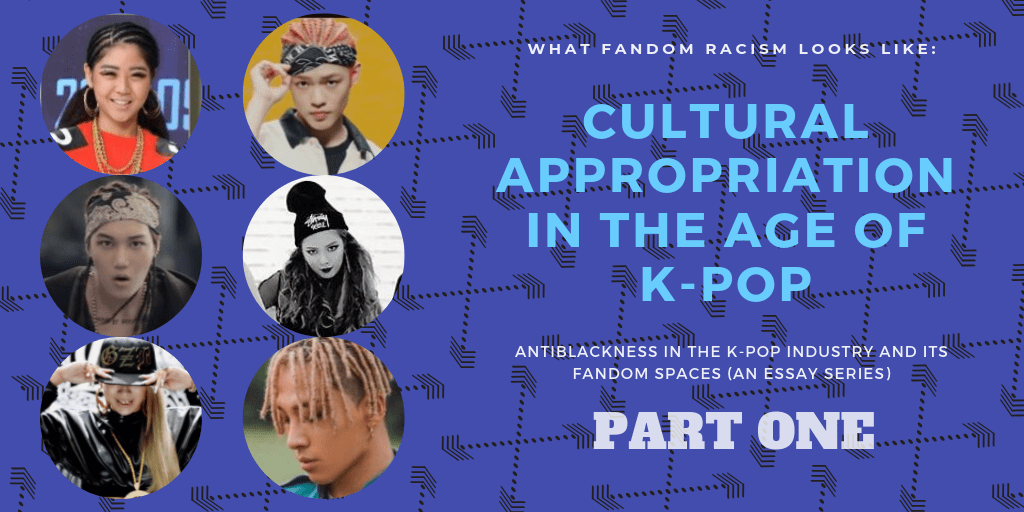
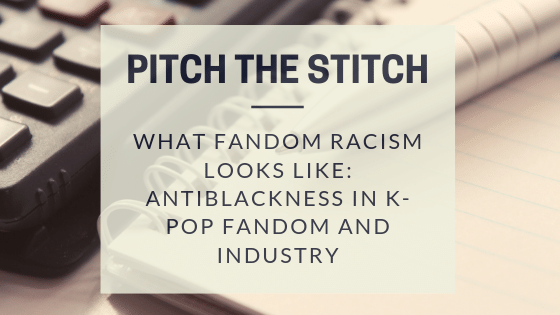
Near the end of January 2019, TK Park of “Ask A Korean” fame took to his site in order to talk about the response from (primarily) Black people to the article he and Youngdae Kim had written for New York Magazine/Vulture about the history of Korean hip hop.
In Park’s article “K-pop in the Age of Cultural Appropriation,” he argues that the idea of cultural appropriation is “inapposite” to K-pop because “K-pop is a product to imperialism by the West, and in particular the United States”.
Park unpacks this statement across the article to some various levels of success, but essentially his goal lies in removing the very potential of/responsibility for the appropriation of Black American culture from Koreans and Korean Americans. He does this, in part, by repeatedly bringing up the aftermath of the Korean War and the long arm of US imperialism as reasons why Black people “can’t” complain. (I’m legitimately Not Kidding about this shit.)
He makes it about privilege as he scolds the (presumed Black) audience for daring to have opinions about how Black music and culture are repackaged by many Korean hip-hop and pop artists and discussed by them and their fans.
Read More »















You must be logged in to post a comment.