Stitch @ Teen Vogue: “iCarly” Fan Misogynoir is Part of a Larger Fandom Pattern

Mosley isn’t the first to be harassed because people in a given fandom assumed she was replacing a white actress (Javicia Leslie’s Ryan Wilder on Batwoman) or because she was playing a racebent version of a “historically white” character (Anna Diop’s Starfire on Titans). And she won’t be the last, because fandom is not a space that protects Black women from misogynoir. Misogynoir, a form of anti-Black misogyny present in the ways that Black women and femmes are rewritten and dehumanized in order to excuse the way we are treated (no matter how much power we have), is alive and well in fandom spaces across the internet.

I write a lot about misogynoir in fandom. It’s something i feel strongly about because of how much it affects a wide range of fans in fandom, Black women and femmes who aren’t seen as part of these spaces. Fan entitlement is huge and we know that aggressive fans truly don’t know an end to their nonsense… but there’s a very specific way that these fans will attack Black women (fans, celebs, and journalists) that needs to stop.

There’s nothing on this earth that can excuse how iCarly fans treated Laci Mosely or how different superhero fans have treated Candice Patton and Anna Diop over the past few years. Black women deserve better treatment in fandom and from fandom.

Full stop.
Head on over to Teen Vogue to read ““iCarly” Fan Misogynoir is Part of a Larger Fandom Pattern”! Don’t forget to share it with your different social media accounts!

Link Lineup – May 2021

Somehow this is both short (only like 5 links this month) and very long (because I had a lot to say about them), but I will return for a BTS + Butter focused one before the end of the month so there will be more links… and more thoughts on them!


Breaking the silence: Exploring the Austen family’s complex entanglements with slavery

If we are asked to determine whether the Austen family was pro-slavery or anti-slavery, then the best answer to that question is both. We can’t take up one half of the facts and ignore the other. We ought to continue to engage directly with these matters as they arise in her writings and to investigate them further in the cataclysmic times in which she wrote. To respond to today’s conversations about Austen and race with dead silence is to join the rest of the Bertram cousins. Scrutinizing the past in these ways ought to prompt a reckoning in fandoms and readerships, as well as better museum labels.

My friend Amanda-Rae Prescott wrote an article about Sanditon that was… not necessarily well received by the Totally Not Racist (But Actually Deeply Racist) Fandom Karens there.  I bring that up because the repeat complaints to her article claimed that she was playing the race card, trying to insert political correctness into everything, and that she was actually demanding historical inaccuracy from the future seasons of Sanditon. The thing about historical accuracy though, is that history is written first and foremost by the people who survived it.

Read More »

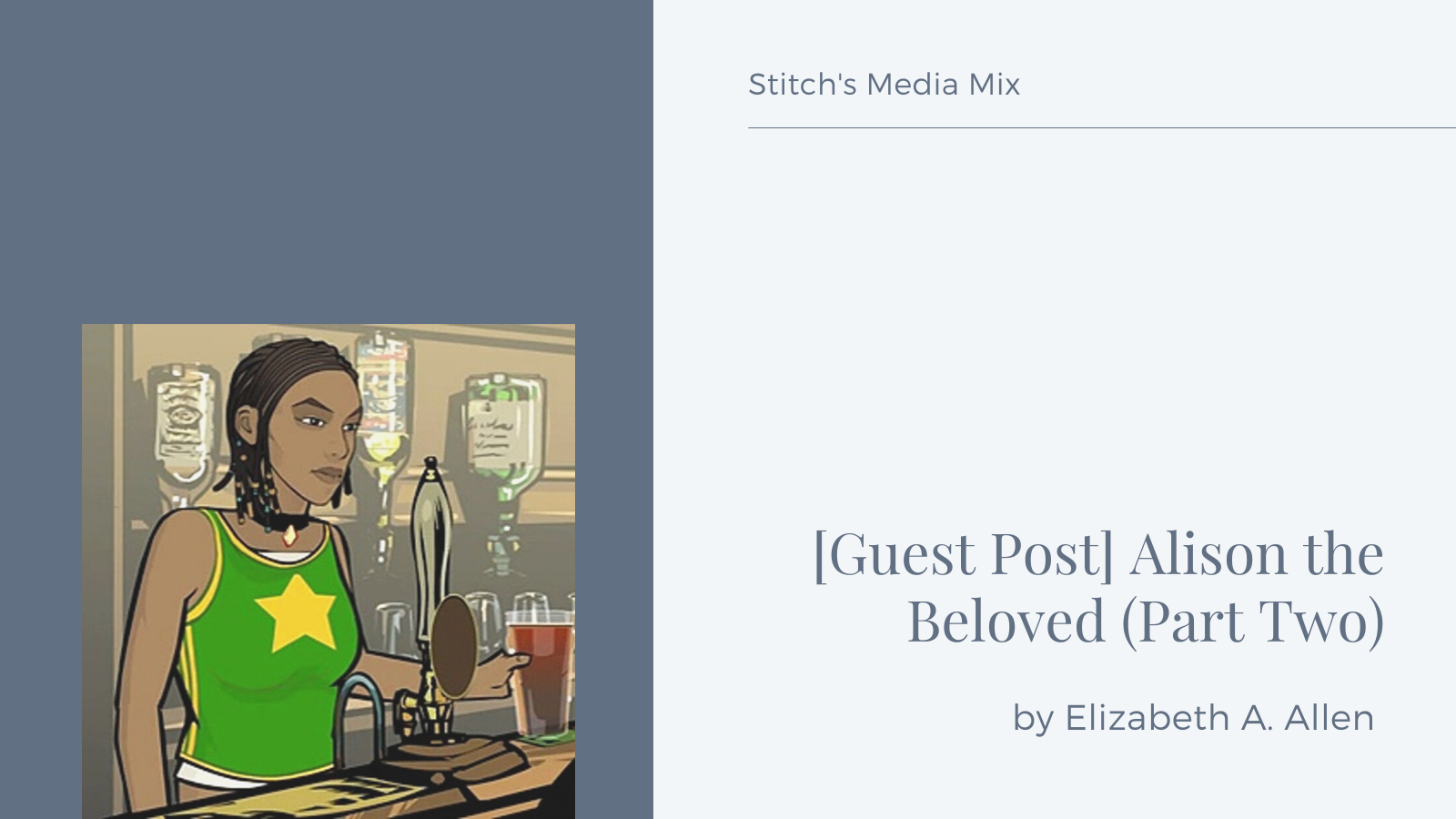
[Guest Post] Alison the Beloved (Part Two)

In the first part of this essay, I explored the portrayal of Black women in Doctor Who, using the example of Alison Cheney. She appears in Scream of the Shalka, a 2003 web animation. Preceding the 2005 TV reboot by two years, she is the first broadcast non-white companion. 

I wrote about Alison’s role as the Doctor’s beloved, a status unusual for Black characters, and how she could have challenged the New Who’s portrayal of Black women as largely disposable victims. At the same time, SotS’ refusal to give Alison the lived experience specific to a Black London woman in an all-white small town reduces her revolutionary potential.

Alison’s ability to change the Whoniverse is also limited by SotS’ — and Alison’s — unpopularity. In this part of my essay, I dig into fan characterizations of Alison, using the AO3 corpus as a representative sample. An examination of SotS fan content on AO3 reveals that Alison may be the Doctor’s beloved in SotS, but she’s largely unloved in fandom.

Read More »

Stitch @ Teen Vogue: What “Falcon and the Winter Soldier” Teaches Us About Fandom Misogynoir

Fans identifying with characters and applying their understanding of social justice-oriented issues to them isn’t inherently a bad thing. But there’s a catch: fandom’s activism and desire to push back against problematic portrayals (or endings) tends to work on behalf of white characters (like Lexa and Castiel, and now Bucky) at the direct expense of Black and brown characters.

If there’s one thing I’m really good at, it’s talking about misogynoir in fandom. (I have an entire mini-series about it here actually!) Fandom has always been primed to believe the worst of Black women – be they characters, fans, or even the performers themselves. What we’ve been seeing since Friday when episode four dropped, is a solid example of misogynoir in fandom and how it’s often done in defense of a white male character.

I love me some Bucky, but the way his standom has been acting about Black characters and now, specifically about Ayo and somehow Shuri) since the start of the show has left me with a bad taste in my mouth. Because this is the fandom pattern: come up with a valid complaint (in this case, the ableism they clocked in the one scene) and then use it to do something super invalid… dismiss and dump on a Black female character.

Ready to read more about this latest round of misogynoir in fandom? Go check out “What “Falcon and the Winter Soldier” Teaches Us About Fandom Misogynoir” now!

A Thought Exercise On Antiblack Microaggressions In Fandom, I Suppose

I just want to talk about how people purposefully misrepresent my work/tweets and assign meanings to it that are actually entirely absent. Because I need to walk through the weirdness to see if I can make it make sense to any of us and just so I can express my feelings in my own space.

If I write a piece, like this one on queer coding villains and the Kylo/Hux fandom from 2018 (brought up because it’s one of the most recent times this misreading/misrepresentation has happened to me), I would think that the meaning is clear.

That piece uses the fandoms for Kylo and Hux (as a pair, but also as individuals) as a way to talk about how queer coded villains were created often hinging on stereotypes and who gets to be coded (or understood as such) within fandom. It provides examples of two social media posts about this POV on a queer (coded) Hux that I felt exemplified what the fandom at the time (in 2018) was saying, talked about historical queer-coding, explains what representation actually is in these cases, and quotes queer critical theorist Alexander Doty’s POV on queer-coding and what it’s bound up in it.

And what does wider fandom get from the post?

What they’ve gotten every single time they’ve interacted with or seen not the actual post but the combination of a quote from the article and the “Dark Side Trio” in the header with the title “Queer Coded Villains Aren’t That Awesome” this past Tuesday?

They complain that I am an “anti” of that ship or that I, noted Thrawn fancier and villain stan on main, hate villains.

They get that I hate Kylo/Hux as a ship. They get that I still hate it. (Even though, I have never really expressed an opinion on the pairings I talk about beyond expressing dislike of how the fandom for that ship and those characters woobifies those men, turning them into villains and actively pretending they’re not fash as fuck and hyping them in a way they straight up don’t do for anyone that’s not a white man in canon.)

None of what those fans believe of me or my work is true, of course, but as we covered in February… none of it has to be.

Read More »

Stitch @ Teen Vogue: Meghan Markle’s Critics Are Using Internet Troll Tactics to Perpetuate Misogynoir

However, nothing about this is new or shocking to Black women anywhere, especially in Britain where misogynoir is a major problem. This behavior — escalating harassment, people accusing us of being bullies when we’re firm, lies that blame us for harm done against other people — is part of the online troll ecosystem’s historical approach to Black women with even a single ounce of power or visibility. What’s happening to Meghan Markle is targeted racist harassment and trolling that uses misogynoir to try and shape public perception of Black women.

I’ve been a Meghan Markle fan from the Suits days and she’s the only reason I even remotely cared about Prince Harry.

Watching the British press, public, and the royal family go after her from the moment that she and Harry announced their relationship has been horrible. It is also unsurprising because this is the reality for Black women (and queer femmes who don’t ID as women). We get slandered, harassed, mistreated, lied on, and blamed for genuinely awful things that we didn’t actually do.

It’s racist harassment, but it’s also trolling. The people doing this don’t see themselves as racists, villains, or even bullies. They’re having fun harming Meghan and they have fun harming other Black people. But because none of them lay hands on the people they’re harming – and some of them have convinced themselves that they’re doing a necessary duty by harassing Black people for years.

No idea what tonight’s interview will bring Meghan and Harry or the viewing audience, but I hope it’s juicy.

[Guest Post] Alison the Beloved (Part One)

The Black companions in the rebooted iteration of Doctor Who have it rough, especially the women. 

Think of Martha, who suffers Simm Master’s mockery and his enforced servitude of her family in Season 3’s Sound of Drums. Think of Bill, who endures a decade of medical abuse and slow Cyber conversion (i.e., being made into a cyborg) at the hands of Razor Master in Season 10’s World Enough and Time/The Doctor Falls. Think of Grace, who dies of electrocution and fall after defending the Thirteenth Doctor from a gathering coil in Season 11’s Woman Who Fell to Earth. The New Who’s Black companions are generally treated as more disposable and less important than the white characters.

But what if it didn’t have to be that way? What if New Who’s first companion had been a young Black woman — cherished, celebrated, integral to the narrative? How might the experiences of Black companions be different if Alison Cheney had been the first?

Read More »

What Fandom Racism Looks Like: “You’re Silencing Meeeee (Feat. Determined Derailers)”

Back in August, I tweeted (as part of a thread) how:

A recurring “fandom vs Me” thing is “Stitch is silencing us” and like… How? How on Earth am I silencing fans of color who are CHOOSING not just to be silent about racism in their fandoms but to support & create horrifying lies about other BIPOC in fandom who are critical?

It’s a recurring theme that I am somehow silencing other BIPOC fans by… having and using my own website, twitter account, and the rare external platforms I’ve been offered across the past six years.

I am silencing others, you see, by having work out in public that people read and share because it is accurate and speaks to experiences that they have had or witnessed in their fandoms. I am silencing BIPOC in fandom, you see, just by existing and talking about what I experience and witness in fandom in a relatable way.

My, how powerful must that make me –

Read More »

Black People in Fandom: Cassandras in Action

In Greek mythology, Cassandra was a princess who got the god Apollo to give her the gift of prophecy but, when she refused to sleep with him (her end of the “deal” according to multiple sources), she was cursed to utter true prophecies that were never believed as that came through with devastating consequences.

Over the years, I’ve realized that many Black people in fandom (including performers and showrunners, not just fans) are treated similarly where they signal or even shout about a problem in fandom or with the source media… but no one listens until it’s too late and they can’t continue to ignore us… or it becomes somewhat profitable to pay attention to what’s been bothering or harming us for years.


The morning that John Boyega’s September 2020 feature in GQ magazine with Jimi Famurewa went up, I lost track of how many people messaged me about or tagged me in tweets related to the piece.

The tweets and DMs I got were from both Black fans and non-Black fans, all shouting because finally we had further explicit confirmation of somethings that I and other Black people had been talking about years: the way that the Sequel Trilogy put Finn’s arc on the back burner on purpose to focus on Kylo/Rey AND the antiblackness aimed at John from fandom (as a whole) harmed him.

Read More »

Thread Collection: Like With Meghan, Coded Antiblackness Comes (1/11/2020)

Originally posted on Twitter January 11, 2020.


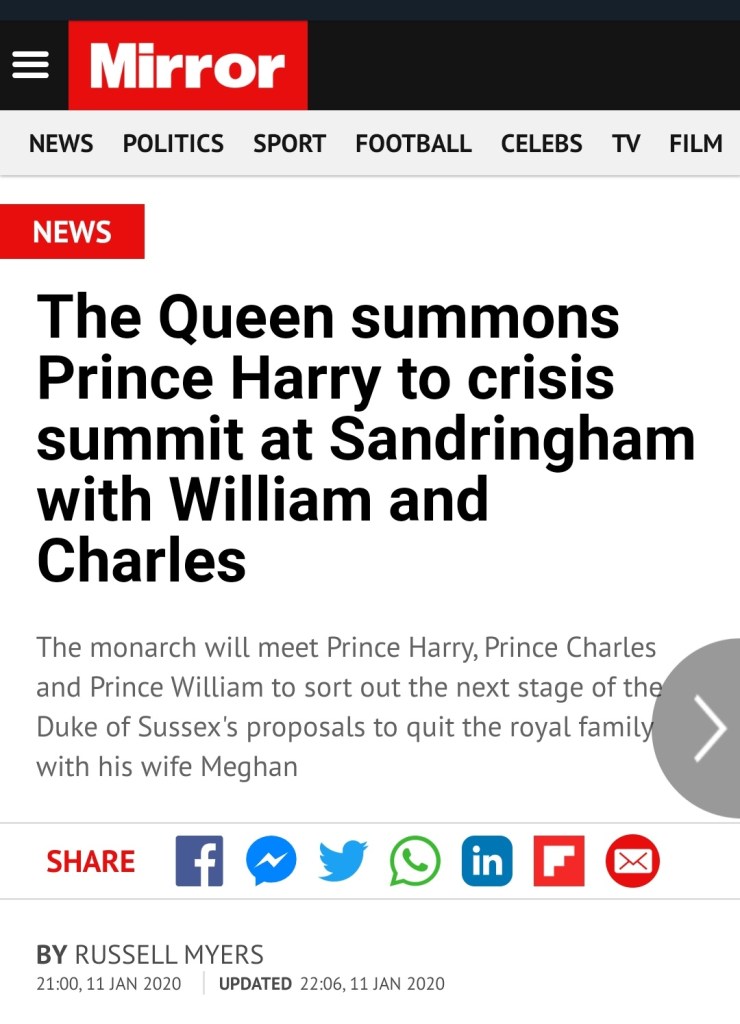
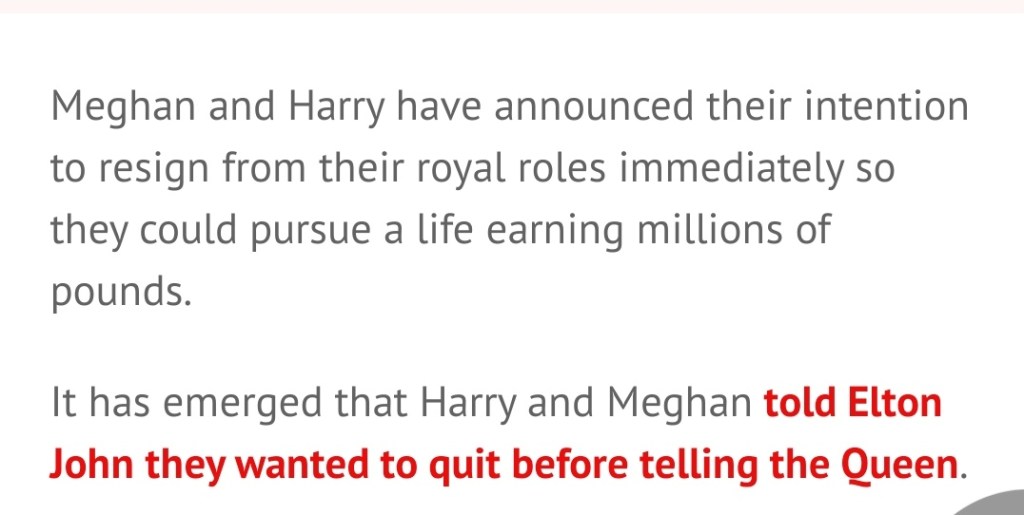
This trash article about Meghan and Harry is actually super relevant to what’s been going on with @JohnBoyega, the Rey/Kylo fandom, and coded racism from people in fandom/media that think we can’t see what they’re doing.

At no point in this article does the writer mention Megan’s actual race or mention her Blackness.

But that doesn’t mean that it’s not racist? Look at the second screenshot and how it continues the condescending attitude towards her.

Read More »

Link Lineup – December

Winding down 2020 with a HEFTY list of links to stuff that I found interesting between November’s second collection and now! Enjoy!


Edward Said on Orientalism

I first read Edward Said’s Orientalism in a class I took for my history degree on British cultural artefacts and colonialism. Edward Said’s views on the ways that culture was used as a tool of imperialism have helped me understand the ways in which literature – and later, fandom – is used to shape a dominant cultural narrative (that does shift depending on where the culture is coming from). I’m fascinated by Said’s work and I think it continues to have stellar applications across a wide range of fields because he’s still right!

The Boundless Optimism of BTS

Even as the number-one pop group in the world, even with their hard work day in and day out, even with tens of millions of adoring fans redefining the concept of “adoring fans” by literally healing the planet in their name, these guys still suffer from impostor syndrome. RM explains, “I’ve heard that there’s this mask complex. Seventy percent of so-called successful people have this, mentally. It’s basically this: There’s this mask on my face. And these people are afraid that someone is going to take off this mask. We have those fears as well. But I said 70 percent, so I think it’s very natural. Sometimes it’s a condition to be successful. Humans are imperfect, and we have these flaws and defects. And one way to deal with all this pressure and weight is to admit the shadows.”

I really freaking love BTS. You may have missed that… somehow. In case you have, this fascinating and well put together Esquire feature serves as a stunning first look at the group – but also works if it’s your fortieth. I chose this segment of the feature because RM’s words about the “mask complex” and while they have the fear that someone will unmask them… They’re going to keep going and admit to their shadows/flaws. Unless you’ve spent the past 2-ish years living under a very large rock (or you don’t follow me on social media, which is… plausible) while I love BTS a unit, I have extra adoration for RM because of how he carries himself and the way he expresses his hopes and fears. This was, overall, an incredible feature that gave us tons of brilliant moments that will either spark your interest in BTS or rekindle the embers of your interest!

Read More »

Music Video Anatomy #4 – NUNU NANA

Last installment, we dove into BTS’ debut single “No More Dream“!


Title: 눈누난나 (NUNU NANA)

Artist: Jessi

Setting:

The main recognizable settings for “Nunu Nana” are a restaurant kitchen doing double duty as a gambling den, what looks like a loading dock behind a set of shops with plenty of room for a red convertible to serve as the main focus, a building under construction and used for money laundering, and a music show stage.

The car itself is a really notable set piece for me because you have three moments where It’s a huge hip hop focus: in the beginning where Jessi’s on the car and a dancer is throwing her back out in front of it, where Jessi is twerking on it after washing the hood, and then the end when she and Hyori are hanging around and in it.

It feels like calling back to video vixen visuals only Jessi is, across the video, both the star the vixen dances for and the vixen herself and while that could be good… with Jessi, it’s… just kind of funny to me.

Read More »

Flashback Friday: My Martha Jones (Fandom) Problem

Note: I originally wrote this back in 2012 in response to a frustrating comment on a tumblr post about Martha Jones. Sadly, after all this time… fandom is not better about Martha Jones or any other Black woman it comes across.


There’s this post with a comic scan from the Doctor Who books going around where Martha Jones snarkily calls 10 out for his treatment of her in comparison of Rose. You can see the post at the link and read the comic for yourself, but basically she looks at him and is like, “Did Rose get this sort of treatment or was it just me?” 

This sort of treatment refers to one awful moment after another. I don’t know if you remember Martha’s run as a companion (and if you don’t, please attempt on fixing that), but she basically got no down time. Where all of the other companions got chances to have fun and visit places where people weren’t trying to kill them either in-show or off-screen, Martha didn’t get any of that. And to top it off, she’s directly referencing the fact that pretty much the only thing 10 talked about were the good times with Rose. Which according to the way he’s telling it, it all of the time.

Read More »

WFRLL: Black Sound… Somehow Not For Black Fans?

BLACK SOUND... SOMEHOW NOT FOR BLACK FANS_ (2).png

Back in in the beginning of April, when I first started this project and the idea for this section started to take form, I screenshot and shared a tweet from a K-pop fan (though the group they preferred, escapes me) that said:

img_20191129_1720409075798537326010011.jpg

“I don’t know why black people are even stupid enough to like K-pop. It isn’t for you. Go listen to rap.”

Go listen to rap.

Imagine having the nerve to tell Black fans to “go listen to rap” because – in this case – you were frustrated by yet another conversation about cultural appropriation in the K-pop industry.

Imagine being that much of a walnut that you zoom on past the fact that even the cutesiest of girl groups will have something that’s attempting to be a rap line and rap breaks in their songs – specifically so that you can tell Black people to get the hell out of “your” fandom space/genre of choice.

This is just a taste of what international fandom spaces are like for Black K-pop fans on social media. When we are even a tiny bit critical of the way our idols try to emulate our cultures, folks tell us that we need to get out of the fandom because there’s no way that we belong.

They tell us to return to rap music, the same rap music that our favorite idols and artists are listening to and performing in South Korea.

Imagine being that awful.

Read More »

[Video] Black Women, Hated: Layers of Misogynoir in Fandom Spaces – PCA 2019

Abstract Black Women, Hated: Layers of Misogynoir in Fandom Spaces As fandom spaces become even more active in asking for and creating positive representation about underrepresented identities (i.e., disabled people and queer people), one notable weak spot in fandom representation politics revolves around the reception towards and portrayal of Black women in fandom. Black female […]