Stitch Talks Ish: Episode 4 – Where Stitch Processes

Episode Notes:

Transcript

Speaker: Hello everyone and welcome to Episode 4 of Stitch Talks Ish. If you missed it check out last month’s episode where I reviewed BTS’s Map of the Soul: 7.

I feel like it’s a fantastic episode, just saying –

But on a related note, episode four is also going to be about K-pop, but from a more critical lens.

Read More »
What Shipping Says About Fandom Antiblackness

Note: I originally did this as a thread in like… 2018 but I think it’s still extremely relevant and so… it’s a blog post now! (If it was a blog post before this, pretend it wasn’t. Mkay?)


I love seeing folks who ship ships that came about as a way to distance a Black character from their white faves be like:

“The only reason antis are mad are because they think [Black character] is nothing without [white character]”

Read More »

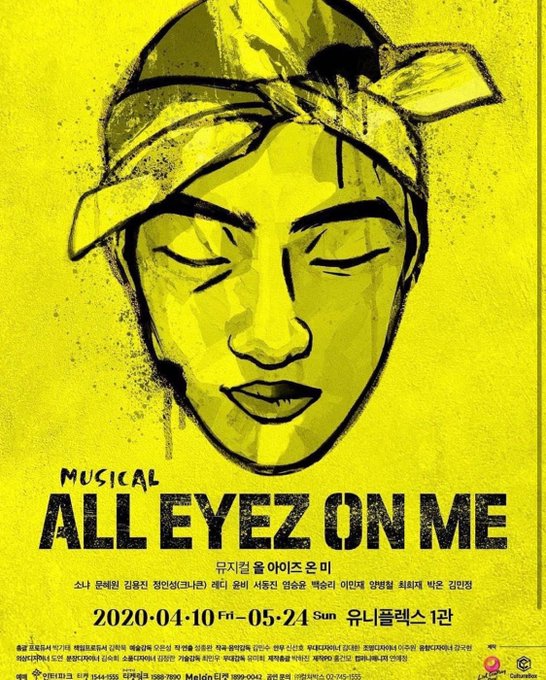
Quick Coverage: All Eyez On YunB Proving Why East Asian Appreciation and Appropriation of Blackness Are Two Sides of the Same Antiblack Coin

I know that not a single one of y’all wanted to know that there’s going to be a South Korean musical version of Tupac’s life called All Eyez on Me performed by a cast that, as far I can tell, only has a single Afro Korean performer at this moment.

I know I sure as hell could’ve lived my life without knowing.

But here we are, with this knowledge fresh in our minds.

Read More »

Introducing Authenticity (Mini-Essay #1)

I sound like a Barbie doll most of the time.

Or Daria.

If you heard me on the phone without knowing anything about me or without seeing my profile picture, you’d probably think I was a sure front runner to play Elle Woods in the musical adaptation of Legally Blonde.

For all intents and purposes, I “sound white”.

I’ve sounded like this my entire life, even when I was a child growing up in the Virgin Islands.

Out of all of my siblings, I am the only one without a recognizable Caribbean accent. If I’m around the right people – my friends and family from the islands or other Black people from other islands – sometimes I sound similar but, it doesn’t happen all that often.

All my life, I’ve struggled with authenticity.

Read More »

Quick Coverage: CLC’s Sorn Should Think Before She Posts

If you’re in or adjacent to Korean pop culture fandom spaces and somehow thought we’d be ending 2019 without further antiblackness from idols or their fans…

a) I’m not sure how you got to that conclusion considering how bad 2019’s been

b) You were wrong.

You were wrong, and now we have another month where an idol has thoroughly proven themselves to give less than zero shits about Black people and Black fans.

Have we had a month yet where an idol hasn’t fucked up on some way? Have we had a month in 2019 that wasn’t rife with antiblackness directly revolving around Korean pop and/or hip-hop as genres or within their fandom spaces?

Read More »

WFRLL: Black Sound… Somehow Not For Black Fans?

BLACK SOUND... SOMEHOW NOT FOR BLACK FANS_ (2).png

Back in in the beginning of April, when I first started this project and the idea for this section started to take form, I screenshot and shared a tweet from a K-pop fan (though the group they preferred, escapes me) that said:

img_20191129_1720409075798537326010011.jpg

“I don’t know why black people are even stupid enough to like K-pop. It isn’t for you. Go listen to rap.”

Go listen to rap.

Imagine having the nerve to tell Black fans to “go listen to rap” because – in this case – you were frustrated by yet another conversation about cultural appropriation in the K-pop industry.

Imagine being that much of a walnut that you zoom on past the fact that even the cutesiest of girl groups will have something that’s attempting to be a rap line and rap breaks in their songs – specifically so that you can tell Black people to get the hell out of “your” fandom space/genre of choice.

This is just a taste of what international fandom spaces are like for Black K-pop fans on social media. When we are even a tiny bit critical of the way our idols try to emulate our cultures, folks tell us that we need to get out of the fandom because there’s no way that we belong.

They tell us to return to rap music, the same rap music that our favorite idols and artists are listening to and performing in South Korea.

Imagine being that awful.

Read More »

Fleeting Frustrations #10 – But You’re From L.A., Amber

This morning I woke up to see that Amber Liu (formerly a part of SM’s f(x), a popular South Korean girl group) was trending on Twitter due to her apology for something that she’d said. The apology in question was for well… antiblackness. Turns out, that when Amber went on Just Kidding News – a satirical news show on YouTube – last week, she brought some internalized antiblackness along with her for the ride.

On the show, Amber was one of several people reacting to a video of a man in California, Steve Foster, responding with anger after being accosted by police officers because he was eating a sandwich on a train station’s platform. In the now private JKN video, Amber said that guy being accosted “just fucking deserved it” because police officers (automatically or inherently) deserved respect.

You can see the clip of her saying this below:

Read More »

[Stitch Talks Ish] Episode 1: Stitch Talks About The Tablo Podcast’s Episode on Racism

Episode notes:

  • First of all, Ming Na Wen plays Melinda May, not May Parker. (May Parker, by the way, is Peter Parker’s alternate universe daughter…) I got my Marvel wires crossed because I was multi-tasking on something while I recorded this! My bad.
  • The title is a bit of a misrepresentation. I actually talk about a single moment in the podcast that kind of disrupted my ability to enjoy what I was listening to 100% (It dropped down to like… 89.78%, not gonna lie.) and then I talked about the casual antiblackness I’ve been noticing from popular Korean and Korean American bloggers in the past year as I’ve worked on my project and how often it comes up with media criticism.
  • At the end of the day, it’s not like I was expecting a single person on this podcast to talk about East Asian antiblackness or antiblackness in general. So I’m not actually trying to place my own burden of responsibility on them. But I feel like it was a bruise on an otherwise genuinely awesome episode because there was no need to zero in on Black Panther in the way they did, I feel like… it wasn’t a great moment and it was unnecessary on top of that.
  • Honestly, the episode is across the board good, but it’s like… that moment threw me off my groove so solidly that well… Yes, I made a 36 minute long podcast episode about a moment in someone else’s podcast.
  • Here’s the link to the episode of The Tablo Podcast I’m talking about!
  • Here’s an archive link to the TK Park piece “K-pop in the Age of Cultural Appropriation”  I reference (and the screenshot of his Busan and Black Panther reference)
  • Have you missed the work I’ve done over the past seven months on antiblackness in the Kpop fandom and in the industry? Here’s my masterpost.

Support Links

Transcript:

From GoTranscript! [Editing is still in progress, but I wanted to post it.]


Welcome to the inaugural episode of Stitch Talks Ish.

This is a mini-podcast that I’ll be doing on my website public content that is available to everyone who subscribes or just shows up on my website and listens to my content. This first episode of Stitch Talks Ish is subtitled “Stitch talks about The Tablo Podcast episode on racism”. Really, it’s that I’m going to talk about a moment in the podcast, not the whole thing. I’m an infrequent listener of other podcasts because I do listen to them, I work in marketing, so there are times where it is literally just reasonable to pop my headphones in and put on a good podcast and just enjoy other people going about their lives.

Tablo of Epik High is a really good podcast. It’s really entertaining, really solid guests, really good introspection. It’s a good podcast listen to while you’re at work and I’ve been in and out, so a couple of episodes behind, but the 15th episode came out today, it looks like. Eddie, Nam and Eric Nam who is on his own podcast with Spotify for K-pop was on and they were talking about racism and it was just honestly really funny because it was like, “Well, we don’t want to talk about K-pop. We’re going to talk about something light and fun. We’re going to talk about racism.” It was an hour-long almost. It was about 54 minutes long according to Spotify on my end. Eric was like, “Are you serious?”

Honestly, I really love that they brought hilarious notes to this topic because obviously somebody who writes and talks about racism in fandom and in media, my experiences with dealing with racism as a queer black person in America, I find it really fascinating and really helpful when other people talk about racism and bring up how it shapes our lives and just put a little light into it, in the situation’s we go through and the kind of poke fun at experiencing racism honestly, so it is a good episode.

If you stop here, that’s all you need to know. If you keep going, honestly, there was- one and a half moments across the podcast that pinged me.

Read More »

What Fandom Racism Looks Like: Real Racism

Over the past three years, I’ve documented multiple people who’ve used real world (offline) politics and historic and present atrocities to silence claims of dissent and derail criticism across different fandom spaces. 

Police brutality, extrajudicial executions of people of color, and the school to prison pipeline are just a few examples of what people consistently repurpose across fandom in order to stop the critical ball from rolling. 

Back in May 2019, I wrote an audiopost script about “Real Racism” in fandom and how people use the idea of “real racism” to derail people talking about racism in fandom spaces – which apparently can’t ever have racism in its borders. 

To many people – who aren’t exclusively white members of fandom – the racism that many other people see and discuss in fandom spaces doesn’t count as “real racism”. Identifiable racism, to them, involves immediate physical pain to a real person of color, hate crimes, or traceable harassment from people saying clearly that they’re harassing someone because of their race. 

To them, because much of what fans of color have detailed as fandom racism don’t involve those easily identifiable aspects that mark racism as a thing that only outsiders to fandom commit, they can’t acknowledge that fandom racism is real racism.

Read More »

Stitch on JinJja Cha Podcast’s Anti-Blackness in KPOP Episode

Jinjja Cha is a weekly podcast hosted by Girl Davis and April about South Korean Pop Culture and everything else in between.

You can find them on:

Soundcloud

Twitter

April’s Twitter

Girl Davis’ Twitter

Their Website

My appearance on Jinjja Cha was kind of destined to happen. I adore Girl Davis immensely and want to be as cool as she is one day. And while I haven’t had the chance to talk with April yet, we’re both longtime Rain and Miyavi fans so like… we’re clearly also soulmates separated at birth.

So, this was in the cards as a Thing That To Take Place.

Talking with Girl was an incredible experience in terms of like… how it felt like just going out with a buddy and getting intense over drinks. (One day, by the way, I’m going to have that experience with them. I promise y’all that.)

Girl and I talked about a lot of different things across our almost three-hour-long conversation. From my whole issue with that one barbershop that was all over social media for a few days to that time I was friends with a white supremacist in college a decade ago, nothing was really off limits?

And I loved it.

The main question across our conversation was about finding our thresholds as Black fans invested in these groups and this industry that has repeatedly shown itself to be incredibly antiblack across the past twenty or so years.

One of the things I’ve been thinking about – especially after reading and sharing Stan’d off by Claudia Williams – is how hard is is to unstan?

Even temporarily because you’re burnt out or frustrated by a member’s hood cosplay or upset at the way the performers/their companies never seem to notice antiblackness in their fandoms – but can leap to quash a dating rumor in a heartbeat.

Read More »

Stitch On NYAN’s “Chicken Noodle Soup For the K-Pop Lover’s Soul”

Not Your Average Netizens is:

A podcast dedicated to South Korean entertainment. Our goal is to be informative and to have an open and mature discussion about the things we love, hate, and love to hate. Most of all we want to have fun with Kpop and share that with others!

We are made up of netizens from all over the world and we gather weekly in our spare time. Sometimes we agree, sometimes we don’t, and we hope that you find yourself in each of our voices.

Not Your Average Netizens’ Links:

Facebook

Twitter

Soundcloud

Youtube

Instagram

At the start of October, I had the honor of guesting on Not Your Average Netizens’ episode “Chicken Noodle Soup For the K-Pop Lover’s Soul”. In the fun and fantastic liveshow, we covered cultural appropriation we see from idols and the antiblacknesss we see from fandom.

In both cases, we talked about “Chicken Noodle Soup” (BTS’ J-Hope’s take on the 2006 song featuring Becky G) and the fandom’s overwhelmingly blah and bad reaction to J-Hope’s gel twists or the art on the single’s cover and Black fans who were annoyed at or offended because of any aspect of the collaboration.

We also talked about how CNS is kind of exemplary of how Black culture/creativity isn’t valuable to non-Black people until other non-Black people partake of it and perform it. Like I’ve talked about this to a bunch of people – and we brought it up here too – that if you’re “acting hood” and dropping signals of Blackness in your video but you… probably have never had a significant and intimate relationship with a Black person… how authentic is your performance, really? Aren’t you just putting on a costume?

And why defend someone’s inauthentic portrayal of Blackness when you’re consuming their content?

Read More »

Fast and the Furious Foregrounding

In this installment of What Fandom Racism Looks Like: Antiblackness in the K-Pop Industry and its Fandom Spaces, we’ll be doing some fast and furious foregrounding.

The point of this foregrounding essay isn’t to provide readers with an exhaustive and complete history of Korean and/or African American hip hop and popular music. 

Here are the goals of this furious foregrounding essay:

  • to provide some context when it comes to what K-pop generally is for folks with a wobbly grasp
  • To briefly cover the history of Black creativity being exported to South Korea and beyond without Black influence (but with antiblackness),
  • To foreground myself and my experiences with this genre and the fandom spaces.

Let’s start with a quick coverage of what k-pop is from two experts who’ve written books on it.

Context Matters

In the introduction to his monograph Sorting out K-Pop: Globalization and Popular Music in South Korea, Michael Fuhr writes that:

K-Pop is mainstream music in South Korea. Initially modeled for the teenager market, this music of the country’s youth has become the most pervasive music in Korea, effectively shaping the sonic public sphere, the musical tastes among different generations, and the imaginative worlds of its consumers and producers. (3)

Then in Suk-Young Kim’s K-Pop Live: Fans, Idols, and Multimedia Performance, she writes that:

In the broadest sense of the word K pop as an abbreviation for Korean popular music includes all genres of popular music that emerge out of South Korea. […] But in from 2009 onward, when the term entered a wide circulation, it came to designate a much smaller fraction of south Korean music. according to pop music critic Choe Ji-seon, it references “music dominated by idols dance music which strives to gain a competitive edge in the international market .in this respect indie music or rock or anything that does not belong to dominant Idol music usually is not characterized as K pop”. (8).

K-pop – as an industry and as a genre (smush), is a multifaceted [thing] that really dates back to just under thirty years ago with the term itself dating back to the mid-nineties. (Suk-Young Kim traces the term to Hong Kong’s Channel 5 in 1995 and mentions that it follows in the footsepts of the already coined and widely used “J-pop” [8]).

Read More »

[VIDEO] A Bitter (Sweet) Summer Package Unboxing

I promised y’all a bitter unboxing and that’s…

Mostly what you’re getting.

One thing I and other Black K-pop fans – especially those a bit further along on our own journeys to unlearn internalized antiblackness – have come up against as we make our way through these fandom spaces and enjoy content form performers is that we’re constantly put into positions where it feels like we have to choose between our identities as fans of a group or the industry and our identities as Black people.

So when a performer or a group of performers does something that’s antiblack or that makes Black fans feel like they’re not being seen as actual fans or even as people, that sort of feeling rears its icky head.

Read More »