Stitch @ Teen Vogue: What “Falcon and the Winter Soldier” Teaches Us About Fandom Misogynoir

Fans identifying with characters and applying their understanding of social justice-oriented issues to them isn’t inherently a bad thing. But there’s a catch: fandom’s activism and desire to push back against problematic portrayals (or endings) tends to work on behalf of white characters (like Lexa and Castiel, and now Bucky) at the direct expense of Black and brown characters.

If there’s one thing I’m really good at, it’s talking about misogynoir in fandom. (I have an entire mini-series about it here actually!) Fandom has always been primed to believe the worst of Black women – be they characters, fans, or even the performers themselves. What we’ve been seeing since Friday when episode four dropped, is a solid example of misogynoir in fandom and how it’s often done in defense of a white male character.

I love me some Bucky, but the way his standom has been acting about Black characters and now, specifically about Ayo and somehow Shuri) since the start of the show has left me with a bad taste in my mouth. Because this is the fandom pattern: come up with a valid complaint (in this case, the ableism they clocked in the one scene) and then use it to do something super invalid… dismiss and dump on a Black female character.

Ready to read more about this latest round of misogynoir in fandom? Go check out “What “Falcon and the Winter Soldier” Teaches Us About Fandom Misogynoir” now!

Stitch @ Teen Vogue: Lil Nas X Is Using Stan Twitter Tactics to Defend “Montero.” He Shouldn’t Have To

The thing is, Lil Nas X cut his teeth on stan Twitter as the user who used to run the popular Nicki Minaj stan account @nasmaraj. From his time as that BNF, he’s learned how to use fandom practices commonly linked with the “bad” parts of stan Twitter for good. From the moment that Lil Nas X’s “MONTERO (Call Me By Your Name)” dropped, he and his fanbase have been utilizing stan Twitter fandom tactics to come for haters’ throats and poke holes in their blatantly homophobic arguments — while roasting them until they’re well done, of course.

I’m a huge fan of Lil Nas X and his brand of being VERY ONLINE appeals to me intensely. “MONTERO (Call Me By Your Name)” is such a fantastic song and the music video is one of the best I’ve seen in ages – and I watch a ton of music videos. The backlash Lil Nas X has been weathering – which invokes the Satanic Panic older Millenials and Gen X-ers remember from back in the day and pulls in homophobia and antiblackness – is horrible. Lil Nas X and his fanbase have been hitting back, but my gosh they really shouldn’t have to!

Go read Lil Nas X Is Using Stan Twitter Tactics to Defend “Montero.” He Shouldn’t Have To on Teen Vogue

Stitch @ Teen Vogue: How Do We Define Fandom? Moving Beyond the Transformative vs. Curatorial Binary

When I think of fandom, I think of printing out and passing around fan fiction in middle school because we didn’t have reliable internet access at home. I think of gifting online friends with stories where our superheroes actually get a break for once. I think of screaming the lyrics to A.C.E. songs along with dozens of other Choice in those pre-pandemic times where concerts were a thing. For me, fandom has always been a complicated but largely joy-filled space where I’ve found some of my dearest friends over a shared love of something wonderful. Your definition of fandom may differ.

In the latest installment of Fan Service, we’re dipping our toes into defining fandom. This is both an educational attempt and a clarifying one that shows different types/definitions of fandom and points out fandoms that don’t fall fully within the transformative/curatorial binary as well as what Fan Service specifically will cover across its run.

Fan Service is really supposed to be a starting point that helps readers and fans incorporate new ways of thinking into their fandom spaces and communities. I’m looking forward to seeing how people incorporate the understandings they’ve gained from this and the other installments in the column into their fandom-ing.

Please share the link with interested folks on social media! I’m still locked on main (because of course, the people on my ass and harassing me aren’t going to stop anytime soon) so I can’t rely on shares through that account. You can also share the tweet below from the site account!

I appreciate your support and I look forward to hearing your thoughts on the column!

Stitch @ Teen Vogue: Meghan Markle’s Critics Are Using Internet Troll Tactics to Perpetuate Misogynoir

However, nothing about this is new or shocking to Black women anywhere, especially in Britain where misogynoir is a major problem. This behavior — escalating harassment, people accusing us of being bullies when we’re firm, lies that blame us for harm done against other people — is part of the online troll ecosystem’s historical approach to Black women with even a single ounce of power or visibility. What’s happening to Meghan Markle is targeted racist harassment and trolling that uses misogynoir to try and shape public perception of Black women.

I’ve been a Meghan Markle fan from the Suits days and she’s the only reason I even remotely cared about Prince Harry.

Watching the British press, public, and the royal family go after her from the moment that she and Harry announced their relationship has been horrible. It is also unsurprising because this is the reality for Black women (and queer femmes who don’t ID as women). We get slandered, harassed, mistreated, lied on, and blamed for genuinely awful things that we didn’t actually do.

It’s racist harassment, but it’s also trolling. The people doing this don’t see themselves as racists, villains, or even bullies. They’re having fun harming Meghan and they have fun harming other Black people. But because none of them lay hands on the people they’re harming – and some of them have convinced themselves that they’re doing a necessary duty by harassing Black people for years.

No idea what tonight’s interview will bring Meghan and Harry or the viewing audience, but I hope it’s juicy.

Stitch in Polygon: The torpedo of stan Twitter hurts everyone

I’ve come across people spamming the comments of her social media posts, telling Gentry to “respect Taylor Swift.” People are accusing Gentry directly of misogyny and telling others not to watch Ginny & Georgia.A few have made overtly racist tweets. Even though Gentry isn’t credited as a writer, hundreds of people are demanding that she take responsibility for the single “joke” on the show that they disagree with. Fueled by Taylor Swift’s public annoyance, these fans — and trolls pretending to be fans — feel empowered to act aggressively in order to protect Swift’s reputation. This is a normal day on stan Twitter, where anything goes to protect the object of fans’ parasocial relationships.

I’m in Polygon for the first – but hopefully not the last – time!

Building off of how many of Taylor Swift’s fans leapt onto Ginny & Georgia star Antonia Thomas to defend Swift from a joke made on the show at her expense, I look at how Stan Twitter encourages aggression as a form of defense and love. I even touch on “report accounts”, a phenomenon I find fascinating for how often the fans running and working with them… turn on other fans who aren’t doing anything wrong.

I live on Stan Twitter and so at times have had to pull back from the urge the spaces instill to support my celebrity favorites however I can. (And believe me, that means having to go “no, I do not need to dunk on a younger adult with a bad opinion about “my” group” and walking away from my computer or at least taking the whining into the nearest group chat.)

The behaviors that these fandoms urge as part of the parasocial relationship (which I find positive a lot of the time actually) can be great. We can get incredible amounts of social justice charity work, widening understandings of the world around us, and communities that help us be ourselves, but better.

But we can also wind up whipped into a maenad-esque frenzy in the name of our beloved celebrity and that’s not great. So let’s talk about that!

Since I’m still locked on main because the harassment won’t stop until I cease to exist, please feel free to share the Polygon link with anyone you think may be interested!

😀

Stitch in Teen Vogue: Netflix’s “Ginny & Georgia” Plays Oppression Olympics — But Nobody Wins

Netflix’s Ginny & Georgia is a messy show with a first half that’s packed full to the brim with racist microaggressions — and that wouldn’t be a bad thing if the show actually engaged with most of them.

What Ginny & Georgia gets right: the mother-daughter relationship, dealing with trauma (poorly, as a person), how tough it is to be the new girl in town, the MYSTERIES.

What Ginny & Georgia gets wrong: the racism. It literally does not know how to handle the thing it manages to build most of its series around.

If you saw the video of Hunter and Ginny’s exchange going across Twitter and were uncomfortable with the nonsense on display, check out my article to see how this is just part of a pattern across the series.

And then come shout with me.

Fan Service #3 – On Racebending and Seeing Yourself in Fandom

Fandom is all about community. We come to fandom because of things we love and connect with other people who love the things that we love for the same reasons we do. There’s a post going viral on Tumblr that says “a fandom can just be you and the ten people you haven’t blocked yet”, and while that’s definitely true and I’m a huge fan of curating your online spaces, fandom also brings together people from around the world who thought they were alone in their uniqueness. Fandom brings people together based on what made them stand out in their offline and online lives.

In my latest Fan Service column for Teen Vogue, I got downright celebratory! We’re talking about seeing yourself in fandom and how fans have made fandom a place where they can see themselves – give or take a few issues of representation that do crop up.

Please feel free to share the link with interested folks as I can’t hype it up on Twitter the way I usually would since I’m still locked on main because of harassment over the last column (and my general existence, they really don’t like that)!

Anyway: I’m looking forward to continuing to bring y’all quality commentary on media and fandom in March’s installments of Fan Service!

I hope y’all enjoy this one!

Fan Service #2 @ Teen Vogue: On Fanfiction, Fandom, and Why Criticism Is Healthy

Head on over to Teen Vogue to read my latest Fan Service installment “On Fanfiction, Fandom, and Why Criticism Is Healthy” where I look at the ways that fandom’s instinctive pushback against criticism affects fans in fandom – not just external critics who maybe don’t “get” nuances of fandom cultures.

It’s not censorship or bullying to point out that there are issues in different fandom spaces that require some updated approaches. For example: “Don’t Like, Don’t Read” and “Your Kink Is Not My Kink” are phrases used in fandom to let people know that they should take care of themselves by not reading content they find objectionable based on a matter of different taste. But neither of those phrases are good responses when fans come up against bigotry in fanworks. Telling someone to “just ignore” transmisogyny, ableism, or open antiblackness in fanfiction isn’t just unhelpful; it’s unkind.

I love critique as a mode of expression and meta fandom works are among my favorite outside of well… literally anything to do with Omegaverse. February’s first column was born out of a deep desire to get people thinking critically about why fandom isn’t down with criticism even from people inside of it. Not every critique of fandom is in bad faith or an attempt at censorship/controlling the average fan and assuming they all are – especially when marginalized people are talking about things in fandom that harm us on purpose or accidentally – isn’t a good way to go about things.

Anyway, please go check out the latest installment of Fan Service and feel free to share the piece with interested friends and fans!

On Fanfiction, Fandom, and Why Criticism Is Healthy

😀

Introducing… Fan Service @ Teen Vogue

In exciting news… I now have an ongoing column in Teen Vogue on fandom!

Here’s the blurb for Fan Service that’s front and center in the first installment “Who Actually Gets to “Escape” Into Fandom?

Fan Service is a column by pop culture and fandom writer Stitch that looks at the highs and lows of fandom, and unpacks how what we do online, and for fun, connects back to the way we think about the offline world.

This first installment looks at how while fandom was a source of escapism for many people from the endless horrors of 2020, there was one glaring way that escapism fell short or excluded people… racism. How can fans of color expect to escape racism in fandom when racists… are here too?

Head on over to Teen Vogue (TEEN VOGUE!) to learn more about how fandom dropped the ball and how we can be better together in these spaces!

And if you liked what you read there and want more, every other week, we’ll do a deep dive into something critical OR celebratory of fandom, highlighting high and low points that even people in fandom tend to miss when they’re not looking for it.

I’m looking forward to fandom-ing with y’all!

Stitch on The James Bond Cocktail Hour: Die Another Day

(Part One)

(Part Two)

I love James Bond.

No shame.

Those of y’all that have been around from the beginning of this blog know that I spent half of 2015 writing about James Bond for The Mary Sue. That was incredibly challenging and endlessly fun.

When Hugh and Tim hit me up for this opportunity to chat with them about one of my favorite Bond movies, of course, I had to do it. This was a ton of fun and I really loved every single moment of picking at this film, poking fun at it –

And of course, being incredibly obvious about my deep deep thirst for Halle Berry in this film and forever.

If you miss the good ‘ole days when pretty much all I did was Be Obnoxious About James Bond, grab yourself a nice cocktail (or a mediocre can of wine) and prepare yourself for An Experience as I Die Another Day on the James Bond Cocktail Hour!

Stitch on The Shipping Podcast

Stitch Computer592.jpg

I had a blast talking about cannibalism and Hannigram with Shirasade! This was such a delightful experience and I loved every minute of it!

If you’ve ever wondered about one of my favorite fandoms (and one of my favorite ships) or how devoted I am to my #EatTheRich ideology… this is something you’re going to want to listen to.

If you want to listen to Shirasade and I talk about cannibalism, the value of Hannigram, and how much I REALLY like the ABO fanfic from this fandom well…

Have I got a podcast episode for you!

Major thanks to Shirasade for having me! It was brilliant!

LISTEN HERE

[Tweet Share] Threads from 2/23 – 2/25

I know there’s some overlap between the folks that support me on Patreon, folks who subscribe to my website, and the folks that follow me on Twitter, but tweets are hard to keep up with.

So I’m playing curator for a minute.

Earlier today, I got distracted from writing (which, granted, isn’t very hard to do) by someone attempting to whitesplain racism and fandom’s open lack of empathy towards Finn from Star Wars. This person even included a whole “this isn’t about race” thing even as they embodied one of the most racist aspects of the fandom: the lack of empathy towards Finn and refusal to actually engage with him as he is (rather than making up weird and problematic untruths about him).

(I’m calling this thread: What Fandom Racism Looks Like: The Empathy Gap in Action but I probably won’t actually turn it into a WFRLL essay because I don’t have the time. But I had the time today… to be a petty and furious Stitch.)

Bonus threads from days before:

A thread about anti-blackness in k-pop fandoms (re: rap/rappers)

“conveniently only caring about ‘real racism’ when fans of color are talking about racism IS RACIST”

double standards and empathy (kylo and finn)

on how white female characters (like jessica jones, wynonna earp, and peggy carter) on shows that are problematic wrt race REALLY don’t represent ~us~


[Stitch Elsewhere] Jessica Jones Doesn’t Care About Men of Colour @ Anathema Magazine

Jessica Jones Doesn’t Care About Men of Colour.png

The thing about the feminism on display in Jessica Jones is that it isn’t universally empowering or accessible. This is a series that centres the titular character’s pain above that of other people, and that treats the lives of people of colour—particularly men of colour—as accessories to her narrative.

As a show, Jessica Jones has represented peak ‘white feminism,’ centring white womanhood, from day one. Like Agent Carter, Supergirl, and Wonder Woman, it’s a narrative focused on white female characters in worlds where characters of colour are afterthoughts, sidekicks, villains, or background support. From Reva Connor’s death being used as a catalyst to jumpstart Jessica breaking free from the control of her abusive ex, Kilgrave, to the overwhelming lack of characters of colour in the series’ New York City, to killing off both of its black female characters in the second season, and to Jeri Hogarth filling the “Evil Lesbian” trope, this is not a series that cares about putting forward an inclusive or intersectional form of feminism.

However, one of the most glaring examples of this is in the way that the series treats its male characters of colour, particularly in its second season. Men of colour and their experiences (including their trauma) are never seen as important or as valid as Jessica’s trauma.

I got to write about Jessica Jones mediocre second season and how the season failed the three recurring male characters of color for Anathema Magazine last month. This season was even more awful about how it treated male characters of color and that’s saying something considering how the first season had Jessica stalk and sleep with Luke Cage knowing full well that he was connected to the woman that she’d killed on Kilgrave’s command.

If you’re interested in reading me at some of my saltiest, check out “Jessica Jones Doesn’t Care About Men of Colour” at Anathema Magazine!

(And if you like me at my saltiest, consider becoming a Patron today because oh boy am I salty over there!)

[Stitch Elsewhere] “Bright” Review @ Strange Horizons

23334320_1280366288735500_1736051239740294551_o

Bright’s entire premise is weak and so’s its reliance on an allegory for racism that fuels its major plot points. In Los Angeles, Orcs are at the bottom of the metaphorical food chain, with many members of the species ostracized and subjugated by humans and elves alike. (While there are other supernatural beings around in one-off scenes, they largely don’t figure into Bright’s black and white worldbuilding.) Orcs in LA, who are largely coded as analogous to Black people via clothing, imagery, and behavior, are collectively being punished for choosing the wrong side in a war two thousand years before the film began. Other characters—such as Ike Barinholtz’s Pollard—use the fact that their ancestors slaughtered and were slaughtered by Orcs in Europe during that war as an excuse for their anger.

At no point does Bright actually combat the racism inherent in the assumption that a race deserves to be oppressed for the “crimes” of its past members. In Los Angeles at least, as mentioned above (we only know about the treatment of Orcs there and in Miami, apparently the only places writer Max Landis has ever heard of), Orcs are second-class citizens who live in poor neighborhoods away from humans. Relationships—of any kind—between humans and Orcs are viewed as offensive, and Will Smith’s Daryl Ward is harassed by (white) police officers whom he worked with over having an Orc as his partner (even though Ward has never asked for a partner and other humans refused to work with Ward for reasons that aren’t explained).

Look, I’m not saying that I’m an urban fantasy expert or anything like that, but I know quality work in the genre when I see them. And Bright isn’t one. Bright takes some of the worst tropes in the buddy cop and urban fantasy genres, adds a stinking heap of a racism allegory, and then serves it up as an attempt at being subversive and cool. (Also, Max Landis is a mediocre writer at best and Bright is not his best. Also also: I hate him.)

If you like my Urban Fantasy 101 article series, check out my review of Bright: a film that basically doesn’t do many things (anything?) right at all. Urban fantasy is one of my favorite genres because of the sheer potential present in the genre. You can do anything within it. So why did Bright choose to regurgitate tired tropes and muddle the message of its own worldbuilding?

You can check out my review of Bright @ Strange Horizons!

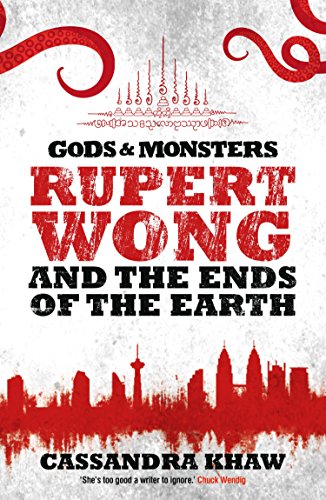
[Stitch Elsewhere] “Rupert Wong and the Ends of the Earth” Review @ Strange Horizons

Rupert Wong and the Ends of the Earth

To the gods and ghouls that he cooks for, Rupert Wong is little more than a mouthy piece of meat. At best, the titular character of Cassandra Khaw’s gloriously gory series hardly registers as anything more than an annoyance. At worst, he’s viewed as a tool to be used up, until he can only serve as fuel and food for divinity.

Part of Abaddon Books’s shared “Gods and Monsters” universe, the sequel to Khaw’s 2015 novella Rupert Wong: Cannibal ChefRupert Wong and the Ends of the Earth plucks main-character Rupert Wong from the familiarity of his life in Kuala Lumpur, dropping him headfirst into a conflict between some heavy hitters of the Greek pantheon and members of a mysterious organization known as Vanquis. Persona non grata in his hometown due to events in the previous book that lead members of his own pantheon to view him as a traitor, Rupert is removed from everything that is familiar and is transplanted, rather abruptly, to a dreary London neighborhood that seems downright lousy with Greek gods and figures from other European mythologies.

There are two huge things that Cassandra Khaw does in Rupert Wong and the Ends of the Earth that make the book—and the characters that inhabit it—too interesting to walk away from. First, there’s what drew me to Khaw’s writing in the first place: how she writes about flesh and food in a way that makes reading about the go-to nourishment of ghouls and gods a chilling, but captivating experience. Then there’s the way that Khaw writes the remains of the Greek pantheon struggling to gain a foothold in a world that has largely written them off as obsolete—and whose new gods are far less open to sharing.

If you’ve been paying attention to me at any point over the past year, you probably noticed that I’m a bit… fixated on cannibalism in fiction. From Tokyo Ghoul to Hannibal to an actual non-fiction book about how very natural cannibalism is, I’ve been hip deep in media and non-fiction centering the subject. It’s been great and gross!

Back in 2015, author Cassandra Khaw (who happens to be one of my pals on top of being a fantastic writer)  wrote a novella called Rupert Wong Cannibal Chef and I’ve been a huge fan ever since. And when the sequel came out this year, well… I just had to review it. When else would I get to talk about one of my favorite writers’s work, cannibalism, and Greek mythology?

Head on over to Strange Horizons to read my review of Cassandra Khaw’s gloriously gory Rupert Wong and the Ends of the Earth today!