[Video] Stitch Tackles TK Park’s K Pop in the Age of Cultural Appropriation

Some commentary on this whole thing and why these conversations are necessary:

The way Blackness is portrayed & performed across kpop is impossible to miss unless you work at being ignorant. Appropriation of Blackness – hair, slang, aesthetic, etc – is infused into the past what… 30 yrs of kpop?

I made a point of making “Cultural Appropriation” one of the main article segments in this series as I was planning it because I got sick and tired of seeing how kpop fandom at large refused to learn and listen – especially to Black fans – about why cultural appropriation hurts.


“But as Americans who shape American pop culture, African Americans’ power is incomparably greater than any non-Americans’, including Koreans’.”

A thing that came up across the research for this segment in TK Park’s quote in the above tweet and several Korean & Korean Americans scholars, performers, and fans is I’ve come across involves them assigning tons of privilege to African Americans because of their US citizenship.

Like TK Park and a ridiculously wide amount of people – especially in conversations about cultural appropriation and Korean pop/hip hop – genuinely seem to think that being Black in the US negates the fact that we live in an antiblack world where we’re oppressed endlessly.

Read More »

What Fandom Racism Looks Like: The (Un)Magic of Intent

I’m gonna be real here:

Most of the time, people aren’t creating problematic or harmful content with the intent to hurt other people.

Honestly, even in an age where spite fuels so much of fandom, a majority of people in fandom aren’t creating content based on the negative feelings that other folks inspire in them.

Mostly because well… who has time to spite-create so seriously?

So yeah, when folks write certain kinds of content in fandom, chances are that when they say “I didn’t mean to offend/hurt anyone” that they absolutely mean it.

Read More »

[Video] The Cultural Appropriation Conversation: So Very Hairy

“The harm of cultural appropriation lies in how the people doing the appropriation of a minority group’s culture, removing it from its context, dehumanize the minority group and dismiss their concerns or humanity.”

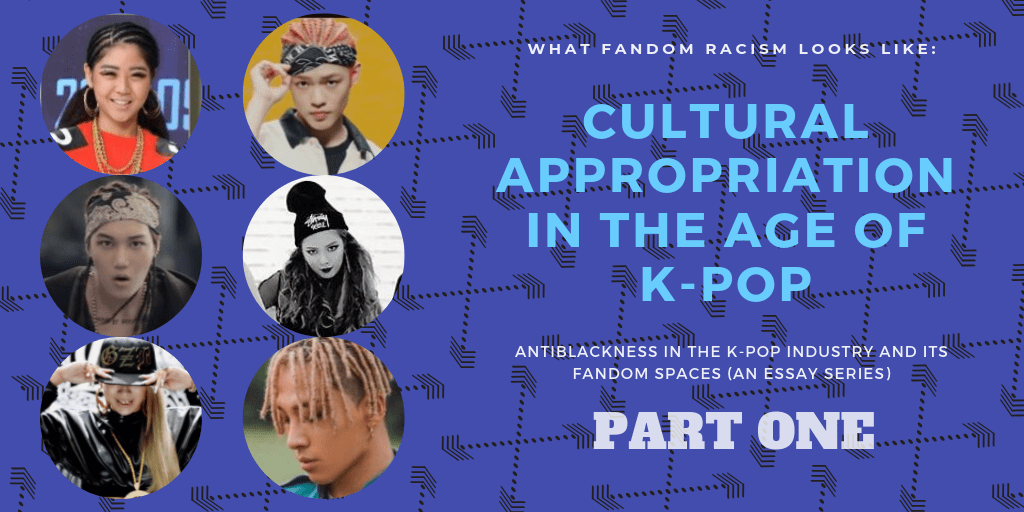
Cultural Appropriation in the Age of K-Pop
Part One: https://stitchmediamix.com/?p=8351
Part Two: https://stitchmediamix.com/?p=8361

Links
Sundai Love: https://www.youtube.com/watch?v=8IFFkexNZOQ
Melanated Butterfly: https://melanatedbutterfly.com/being-black-in-south-korea/
Different in Korea: https://differentinkorea.wordpress.com/

Cultural Appropriation in the Age of K-Pop Part Two

Did you read Part One?


Another issue in how cultural appropriation of Black culture and Blackness leads people to devalue the culture and people they’re copying: across my research for this essay series – and this installment in particular – one thing that keeps coming up is how little people care for Black members of the fandom spaces and for Black people in general.

One way that they do this is in the way they talk about hip hop and rap.

How many times have you seen people talk about how they didn’t actually like hip-hop or rap until they listened to it from a Korean artist because that version of the genre was so much purer?

I see it primarily with the rappers currently in idol groups, but I don’t doubt that hip-hop artists in Korea who are outside the idol industry get hyped up in a similar way.

Rap from Black USians is always associated with violence, poverty, grasping for unearned power, misogyny, etc.

The image of a rapper to Koreans and to many non-Black fans engaging with this music – especially outside of the US – is someone closer to Fetty Wap in “Trap Queen” or Snoop Dogg in the nineties than Jidenna in “Long Live the Chief” or Janelle Monae and Missy Elliot in uh… anything.

Like there’s no attempt to understand that there’s diversity in hip-hop in the US, that rappers and Black people come from all walks of life and are valid because of it.

Read More »

Cultural Appropriation in the Age of K-Pop Part One

“Ideas, cultures, and histories cannot seriously be understood or studied without their force, or more precisely their configurations of power, also being studied.

Edward Said, Orientalism

“Dressing up as “another culture”, is racist, and an act of privilege. Not only does it lead to offensive, inaccurate, and stereotypical portrayals of other people’s culture … but is also an act of appropriation in which someone who does not experience that oppression is able to “play”, temporarily, an “exotic” other, without experience any of the daily discriminations faced by other cultures.”

Kjerstin, Johnson, “Don’t Mess Up When You Dress Up: Cultural Appropriation and Costumes

Near the end of January 2019, TK Park of “Ask A Korean” fame took to his site in order to talk about the response from (primarily) Black people to the article he and Youngdae Kim had written for New York Magazine/Vulture about the history of Korean hip hop.

In Park’s article “K-pop in the Age of Cultural Appropriation,” he argues that the idea of cultural appropriation is “inapposite” to K-pop because “K-pop is a product to imperialism by the West, and in particular the United States”.

Park unpacks this statement across the article to some various levels of success, but essentially his goal lies in removing the very potential of/responsibility for the appropriation of Black American culture from Koreans and Korean Americans. He does this, in part, by repeatedly bringing up the aftermath of the Korean War and the long arm of US imperialism as reasons why Black people “can’t” complain. (I’m legitimately Not Kidding about this shit.)

He makes it about privilege as he scolds the (presumed Black) audience for daring to have opinions about how Black music and culture are repackaged by many Korean hip-hop and pop artists and discussed by them and their fans.

Read More »

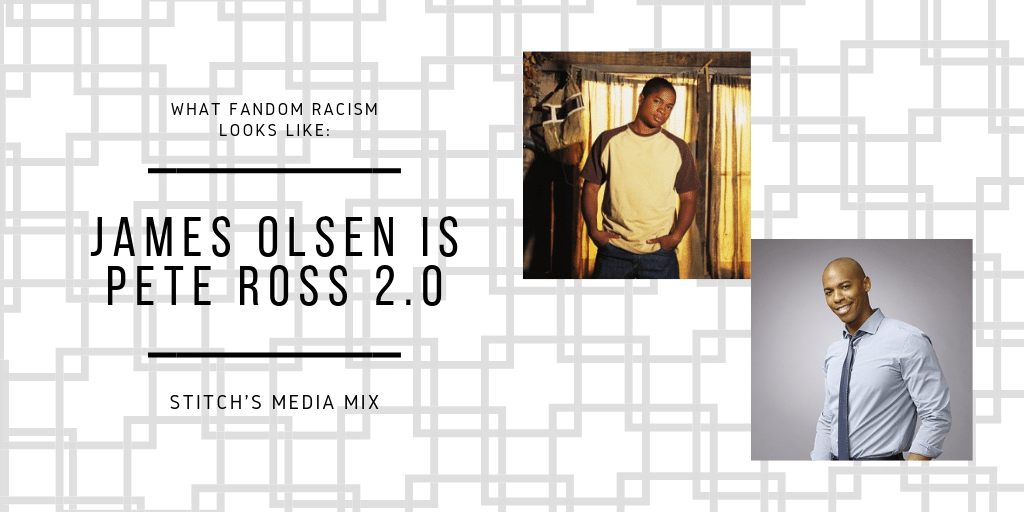
What Fandom Racism Looks Like: James Olsen is Pete Ross 2.0

I’ve talked a ton about what fandom spaces look like when Black woman steps into a racebent role, but not about what happens to Black men who play racebent roles in the same franchises.

If you think that things are any easier for Black men in fandom well…

You’ve thought wrong.

This installment of What Fandom Racism Looks Like will look at how the racism behind how the Smallville fandom treated Pete Ross – played by Sam Jones III – and how, over a decade later, the Supergirl fandom pulls from the same playbook in order to excuse heaping a ton of racism on James Olsen and the black actor that plays him, Mehcad Brooks.

Read More »

Antiblackness in the K-pop Industry and its Fandom Spaces: Introduction

WFRLL - K-Pop - Intro Header - A (1).png

Anti-blackness is universal.

Outside of maybe a handful of countries around the world, there aren’t many places where I’m guaranteed to be entirely free from anti-black racism. Even my home island of St. Thomas in the US Virgin Islands isn’t a safe space for me as a Black person –

And I grew up there.

Because anti-blackness is so ubiquitous across so many different spaces and how often it shows up in situations where Black people aren’t actually present or involved, I am not surprised at anti-blackness being present out of the blue – to me at least.

I am really not surprised at how antiblackness shows up in the K-pop fandom – because antiblackness is everywhere in fandom spaces.

But there’s something a little… extra about how anti-blackness works in K-pop fandom spaces and how much of that anti-blackness is actually fueled by issues present in the music industry’s consumption and repackaging of Black culture.Read More »

[Pitch The Stitch] What Fandom Racism Looks Like: Antiblackness in K-Pop Fandom and Industry

Pitch the stitch - kpop fandom and industry antiblackness

In case you’ve missed it, I’m doing a project for my website on anti-Blackness in K-pop fandom spaces and why the industry’s understanding and appropriation of Blackness/Black culture for the aesthetics of it all partially fuel the problem.

It’s already a massive project, but I want to make even more work for myself by opening up for guest posts related to the series I mentioned writing over on Patreon.

While of course, anyone can send me a pitch and I’m open to anything, I want to center the voices of other Black fans and Korean fans across their diaspora who’ve talked about the genre/industry’s relationship with (anti?) Blackness across this project.

If you’re interested in doing a guest post at any point in this project – about your relationship with K-pop as a Black fan or how you engage with the reality of the fandom or industry’s anti-Blackness as a Black and/or Korean person in these spaces – here’s your chance. I’d like to open up my platform and my site to you!

I’m looking for:

  • 5 guest posts (for the time being, i’d eventually like to post as many as 10 essays/guest posts)
  • 600-1000 words each (i won’t say no to longer posts, but I feel like that works best for what I can pay)
  • posts can be celebratory OR critical when it comes to talking about your experiences as fans

While I can’t pay a ton because I’m poor and money’s tight, THESE ARE FOR PAID GUEST POSTS @ $40 a post!

This is my first attempt at doing this kind of organized guest post set-up so please, don’t let this flop!

🙂

You can find the Google form here.

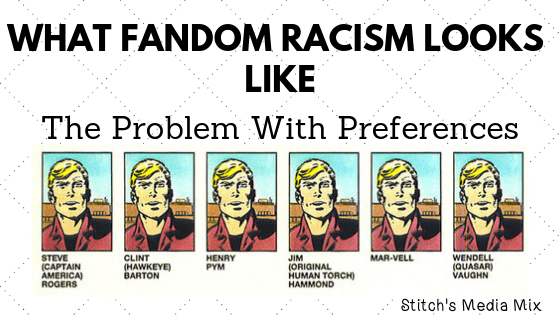
What Fandom Racism Looks Like: The Problem With Preferences

problem with preference

Back when Captain America: Winter Soldier first came out in 2014, I noticed something… strange about many members of the MCU fandom and how they would talk about Anthony Mackie’s Sam Wilson. Many of them honestly saw no shame in how they treated Sam Wilson as if he was the first Black character they’d ever engaged with.

Not only did some people (sorry scifigrl47, but I’m incapable of letting go of this) go above and beyond to posit that it’d make “more” sense for Sam to be a member of Hydra than Tony Stark at a time when Marvel wasn’t trying to make Hydra an equal opportunity employer for all marginalized people –

But you had folks who literally made and shared posts that outright said things along the vein of “[Sam Wilson] is the first time I’ve ever been attracted to a Black man before.”

No one should feel that comfortable with expressing their racist preference thatthey were outright comfortable with confessing that a Black actor in 2014 is the first time they realized that Black people could be attractive.

(Especially not Anthony Mackie who is honestly only “alright” in the looks department.)

The thing is that the word “preference” allows folks in fandom to feel as though they’re just expressing their totally neutral preference for white male characters above everyone else when they’re practically playing into literal centuries of sexual racism and the complicated politics of desire and race.

Preference isn’t neutral.

Neither is whiteness.

In 2019, it’s time we sat down and accepted that fandom’s overwhelming preference for white male characters in and out of slash ships/fandom isn’t neutral.Read More »

What Fandom Racism Looks Like: Keep Calm and Wait Your Turn

keep calm and wait.jpg

One step forward for white women in nerdy culture… doesn’t actually equal a step forward for all women.

After years of talking and writing about the need for representation in media, I obviously recognize the need for representation in media.

However, I can’t stop feeling some frustration about how white women are frequently set up by nerds and within fandom as the proper first stop for representation. Read More »

What Fandom Racism Looks Like: Silly Ship Wars

What Fandom Racism Looks Like_ Silly Ship Wars

Declaring the problem a ship war wasn’t so much revisionist history as wishful thinking: fans like to consider fannish space utopian, and racism doesn’t belong in utopia— therefore the problem wasn’t racism, it was ships. This line of thinking was white privilege at its finest (or lowest), with POC fandom as its casualties.

From “Not So Star-Spangled Examining Race, Privilege and Problems in MCU’s Captain America Fandom” by Cait Coker and Rukmini Pande in The Darker Side of Slash Fan Fiction

Time and time again in fandom, it’s been proven that the easiest way to stop people from taking the critical thoughts of fans of color seriously when we talk about racism in fandom spaces is to reframe it all as “just” a ship war.

If criticism of racism can be dismissed as “just” jealous shippers lashing out at a supposedly better positioned or more liked ship, then no one has to wrestle with what we’re actually talking about:

That time and time again in fandom’s shippy spaces, fandom actively chooses whiteness. Fandom constantly chooses white characters, whitewashed characters of color, white experiences, and white fans over people of color – real and fictional.

If you reframe it as “just” a ship war where petty babies are out to police fandom because their ship isn’t doing so hot in the charts –

Who’s going to listen to us?

Why would anyone listen to us?Read More »

What Fandom Racism Looks Like: Woke Points For What?

Woke Points For What_

In and outside of fandom spaces, performative allyship is a thing to be wary of.

In a piece for The Wooster Voice, writer Sharah Hutson describes performative allyship as, “when folks pretend to care about a cause but magically forget to keep the fight going outside of certain spaces”.

We’re talking about people who only seem to care about the plight of the underprivileged when it looks like they can get something out of it.

You know, like folks who record themselves helping disabled people cross the street, people who post about how they helped the neighborhood homeless person get breakfast on social media, and white saviors who travel to Uganda and Haiti to “help” but are really just participating in imperialistic voluntourism that does so much more harm than anything else.

These people may mean well and they probably even see themselves as actual allies, but their allyship seems skin-deep and conditional on the attention they get or the marginalized people’s compliance and subservience. The second they’re no longer getting praise or when the person or group they’re trying to help isn’t compliant, the person in question stops being an ally.

But you know what’s not performative allyship?

A Black person in fandom talking about what they find racist in a piece of media or fandom space.Read More »

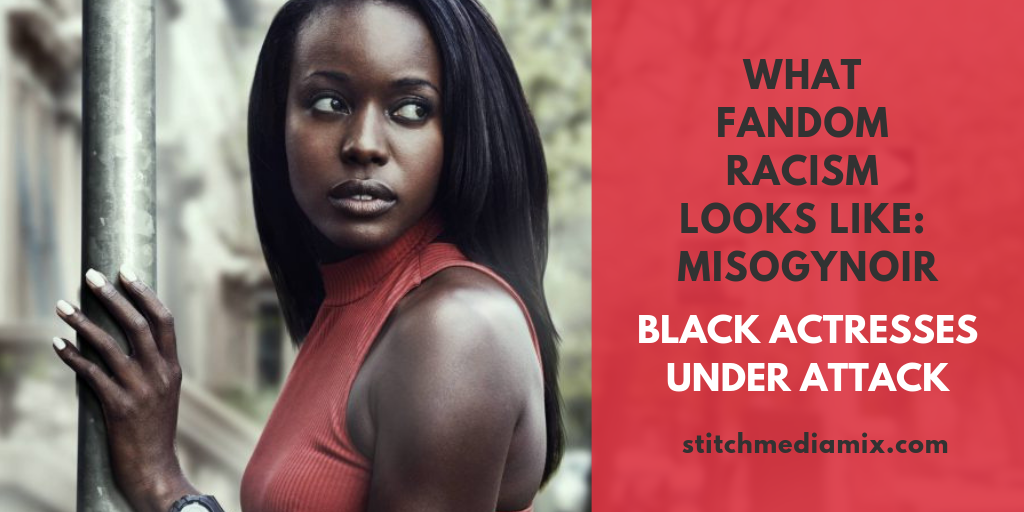
What Fandom Racism Looks Like: Misogynoir – Black Actresses Under Attack

Don’t forget to check out last month’s post and the introduction!


wfrll - misogynoir - black actresses under attack

  • U simple bitch. This is why comic book fans hate Hollywood. The criticism is not b/c U R an African actress but that ur 3 personas look too human wearing cheaply made costumes . U didn’t even care enough to Youtube the animated series and actually research the characters. (a comment sent to Anna Diop on twitter by user @Walter_Stylez on 4/13/2018)
  • I’m grateful you made starfire hideous and ugly, you are her first adaptation that looks less exciting. I’m sure this will make people choose batgirl over starfire now cuz she’s more prettier of a love interest. Dickbabs all the way!!! Thank you Anna for propping up my ship!!! – From twitter user @dickbabs3 on Twitter directly in response to Anna Diop posting an image of herself in a suit on 12/11/2018

Name a Black actress in a popular nerdy franchise and I’m pretty sure I can find you proof of people claiming that they:

  • Are too ugly
  • Aren’t talented enough
  • Are too “ghetto”
  • Don’t have enough chemistry (with the nearest white person)

To play the role they’ve been cast in.

Angel Coulby didn’t just have to deal with people claiming historical anachronism for her casting because Guinevere stems from a Welsh name that means “fair/white and smooth” in a show full of historical inaccuracy and sorcery.

She had to deal with a ton of “I’m not racist, but”s claiming that she was a terrible actress, that she wasn’t attractive enough to play Gwen, that she wasn’t young or refined enough… you know the drill.Read More »

What Fandom Racism Looks Like: Misogynoir – Black Women in the Way

Don’t forget to check out last month’s post and the introduction!


wfrll - misogynoir - black women in the way

I may later eat my words because I haven’t seen more than season 1 of ToS or any of the movies but I hate that Uhura in the reboot is just a love sick puppy that follows Spock around. Like she doesn’t even resemble herself and she feels less of a character. (A tweet from twitter user @meganbytetweets from 2/4/2018.)

That sucks i just really hate iris and barry idk i rather ship him with linda, patty or caitlin lol (A tweet from twitter user Amber_G27 from 4/6/2018.)

Few things inspire more misogynoir than a Black female character that fandom thinks “gets in the way” of a ship involving two white characters.

When Zoe Saldana was cast as Nyota Uhura in the 2009 Star Trek reboot film series, fans were fine… until it was revealed that Saldana’s Uhura was also in an established and committed relationship with Spock.

Then it became a problem.Read More »