Category: Book Talk
[Fanwork Recommendation] Hermione Granger and the Quarter Life Crisis
Hermione Granger and the Quarter Life Crisis is a new fan-made series that looks at Hermione’s life post-Hogwarts. It’s incredible, relatable, and funny as hell for the most part (but don’t let your guard down like I did because HGatQLC will hit you in the feels before the first episode is done).
This first episode has me super excited to see what they’ll do next! The series has a racebent Black Hermione Granger, a Draco Malfoy that I kinda don’t want to fight, and some really well-written characters that I’m excited to see more of and the potential for incredible tension.
If, like me and many others, you were disappointed with Rowling’s nigh unbroken focus on white characters and the fact that everyone’s life goal was to be married off in neat M/F packages with babies on the way, give this webseries a try because it embodies the fandom mantra of “Epilogue? What Epilogue?”
To find out more about this series, check out the first episode and follow the awesome creative team on:
Stitch’s Top Fantasy Reads of 2016
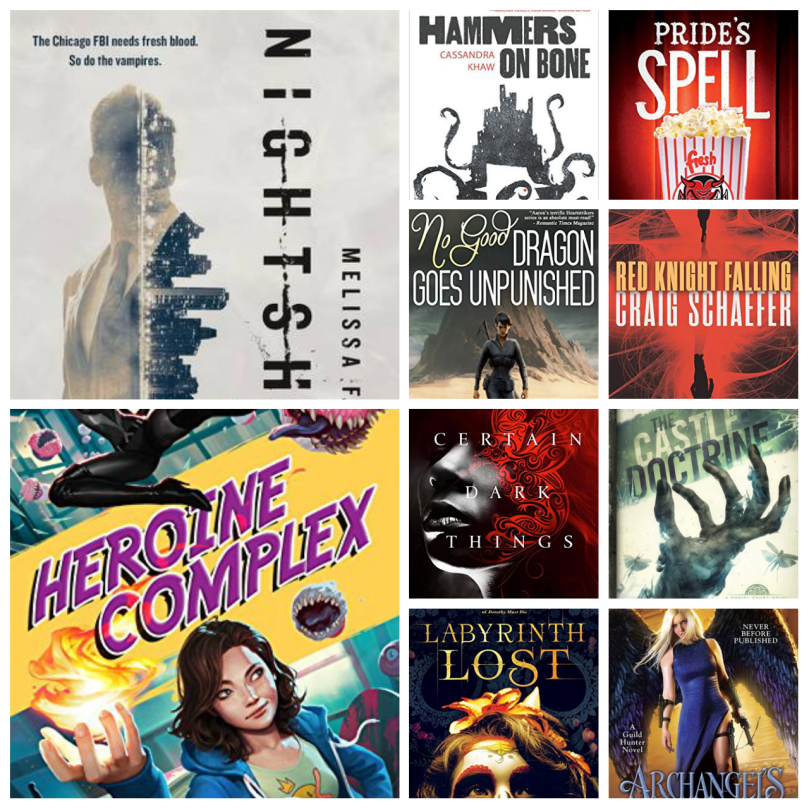
Note that this list isn’t in any particular order. They’re all books I either enjoyed a ton or that stuck with me even after I was done reading. It’s not meant to be an exhaustive list as I read a lot of amazing books but had to pare this down to ten books so I could actually manage to get the dang thing out before Christmas.
Note also that I was mad tipsy when making the accompanying podcast and so my scatterbrain is at an all time high. If you’re looking for something where I remember character names and heck, even basic plot points, um… please don’t listen to the audio and just read the descriptions instead!
1 The Castle Doctrine – Craig Schaefer
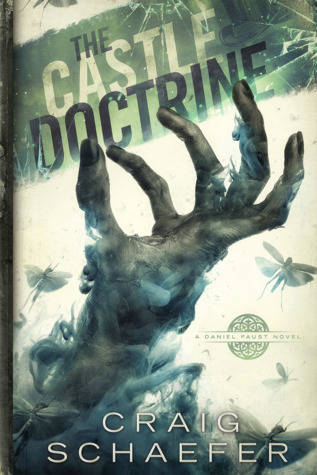
The sixth book in Craig Schaefer’s Daniel Faust series, The Castle Doctrine is one of many urban fantasy novels that legit left me messed up by the time I was done reading them. Schaefer’s writing style is incredible, full of descriptions that left me cringing (but still flipping the pages on my kindle).
The way the man writes violence is like… out of this world. Daniel Faust reminds me a lot of Jim Butcher’s Harry Dresden only you know… not a misogynist and with a clearly defined moral code of his own (like Deathstroke but with magic and broke all the time). Start out with The Long Way Down and work your way to this book because it’s so worth it.
The Great Big Anita Blake ReRead – The Laughing Corpse
Content warnings: ableism, sex worker shaming, abuse and abusive relationships, and racism.

The worst part about it was that she was right. I couldn’t just put a bullet between her eyes, not unless she threatened me. I glanced at the waiting zombies, patient as the dead, but underneath that endless patience was fear, and hope, and . . . God, the line between life and death was getting thinner all the time.
Anita after realizing that the zombies Dominga raises are sentient because she put their souls back inside their bodies. So far, this is the one thing that Anita won’t do. It’s a small comfort considering all of the things that she does do in future books.
I just want to get this off my chest before I go any further: The Laughing Corpse is a hot ableist mess. On top of this second book in Laurell K Hamilton’s Anita Blake series continuing the trend of being ridiculously racist – specifically towards Black and Latinx people – it’s also full of the kind of ableism that shouldn’t even have existed in the Nineties when this book was published.Read More »
Condescension, Crosstalk, and why Connie Willis’ Misunderstanding of the Romance Genre is a Deal Breaker for Me

When I first heard about Connie Willis’ book Crosstalk, it sounded like a bunch of fun.
I put it on my wishlist and dropped a bunch of hints that I’d be open to reviewing it even if I had to buy the book myself (which wouldn’t be an issue as even if I get an ARC, I buy the books once they’re released).
Then today, I woke up to see an article on The Verge where she was interviewed about the book and, in one response, managed to miss the entire damn point about romance as a genre and as an aspect of our lives (for those folks who aren’t aromantic) and I decided to save my money. Read More »
The Great Big Anita Blake Reread – Guilty Pleasures
Content Warnings: This review of Guilty Pleasures talks about the following content that readers may find disturbing, upsetting, or triggering: racism, internalized misogyny, victim blaming with regard to childhood abuse and sexual trauma, sex worker shaming, connecting sex work with trauma or marginalization (as in the only people in this series who do sex work are people who are broken and/or marginalized and they all need rescuing), gender essentialism.

“Vampires are People, too.”
– The button that Monica Vespucci is wearing when she and Anita first meet echoes a repeated message in this series about how vampires are people too. But people you know… suck. So vampires do too, and not just because it’s how they get nourishment.
Despite it being the first book in author Laurell K Hamilton’s Anita Blake series, Guilty Pleasures was probably the fourth or fifth book in the series that I read. It is um… a doozy of a book.Read More »

Stop Using the Harry Potter series’ Original Publication Dates as an Excuse for Rowling’s Diversity Fails

Every time I talk about J. K. Rowling’s current and continuing diversity fails, someone always has to show up to remind me how she “couldn’t write diversely because it was 1997”.
Without fail, people are more invested in protecting Rowling from criticism she will never see or care about than in acknowledging the way that her writing has continued to erase marginalized people while allegorizing their struggles in order to pad her plot and make her characters more interesting.
Even if I knew (or cared) more about the realities of publishing when I was seven years old, the fact of the matter is that JKR managed to put a ton of atypical things in her “kids’ series”. She wrote about the violent effects of racism and blood supremacy as well as child abuse and children coming of age in a war torn world.
And yet, she “couldn’t” include more than eight characters of color or any queer characters who made It to the end of the series alive or who were queer onscreen?
The “it was 1997” excuse for Rowling’s diversity fails only holds a scant bit of water when it comes to looking at the body of her work. Other writers wrote queer characters into their works, other authors managed to have diverse children’s books during the same period that Rowling was publishing her books.Read More »
Quit Trying To Make”Forced Diversity” Happen (It’s Not A Thing)
Whenever authors talk about how much they hate “forced diversity” and how annoyed they are that readers and bloggers now expect writers to create that they call “unrealistic” worlds where people who are not the default (by being queer, POC (or the fantasy/sci-fi equivalent), and/or not being cis), I always want to laugh.
Or ugly cry.
Whatever.Read More »
Fear of Fucking Up: Not Actually A Good Excuse For Erasing Characters of Color
Recently, there’s been a spate of fannish and original writers claiming that they’re so afraid of negative reception and responses from people of color, that they refrain from writing characters of color in their works.
We saw this during Amy Lane’s racist mess (where she wrote a book that had a black character refer to himself as a monkey) where dozens of M/M authors rushing to defend her claimed that POC were so scary and aggressive in defending themselves from racism that they were perpetuating (racial slurs as “cute” petnames and objectification in droves) that they’d never be writing characters of color again.
We also saw it a couple months ago in fandom where BNF Franzeska decided that the best response to Black fans pointing out racism towards Finn in Star Wars to write thousands of words of white washed fandom history that contained comments about how we (people of color willfully misidentified as white social justice warriors jonesing for ally cookies) were why they weren’t writing Finn.
Her post claimed that white writers were terrified of being accused of racism for… constantly imbuing their Finn-characterization with stereotypes of black masculinity and objectifying Finn’s body.
I still see my fellow fans of color dealing with that shit now, damn near three months after all of the work Black fans and anti-racist allies put into writing and talking about fandom’s racism. It’s still a thing that I see people claiming as if researching and respecting characters and people of color in fandom is so damn difficult!
These authors’ excuse for unbroken whiteness in their fiction appears to be that it’s downright terrifying to imagine people of color who’ve asked for characters like them to be written responsibly getting annoyed with racist portrayals of these characters of color.
You know, because it’s all about hurt white feelings in the end and it’s more upsetting to be confronted about their racism than to be confronted by racism.
Urban Fantasy 101 – It’s A Heteronormative World Out There

Notes: Content warnings for brief (but nondescriptive) mentions of sexual assault, mentions of homophobia in the text and a linked article), and just general heterocentrism/heterosexism.
One of the recurring tropes common to the urban fantasy genre is the idea that certain species have one “opposite sex” soulmate that is absolutely perfect for them and when they meet (or, more commonly, bang) for the first time, all of the pieces slot into place and their biology shifts so that they can have babies.
This focus on soulmates (often just “mates”) in urban fantasy has so much wasted potential behind it.
Instead of opening the concept of “mating” up to queer characters or characters in polyamorous relationships, these universes typically center mating and relationships on heterosexual and monogamous couples (with the occasional “these two werebears are my mates and also brothers as not to squick bigots who want to read polyamory but not that kind of polyamory” thrown in just to be frustrating).
I’m going to use specific examples here with Sherrilyn Kenyon’s Dark Hunter series (of course) and Sarah J. Maas’ A Court of Mist and Fury (which is just regular fantasy, but still more recent than most of the stuff I usually reference). I’ll also be talking about some other book series and author examples (both positive and negative).Read More »
Letters to the Author – Afton Locke
Note that this Letter to the Author contains graphic descriptions of racism and racist violence (sexual and otherwise) as it relates to the reality of white supremacy in history and historical romances.
Dear Afton Locke,
I could write you about a bunch of things in your Oyster Harbor series. I could talk about your constant use of food terms to describe Black characters (“butterscotch” and “light mocha” stand out). I could complain about how your heroine in Cali’s Hurricane is a vodou practitioner and how it’s so mishandled. I could even point out that the plot in and of itself is supremely flawed and in no way as accurate as you think.
But you know what, everything pales in the face of the one main question that I’ve had for you since the moment I read anything of yours: What on Earth possessed you to write a series of historical interracial romance novels where (at least) two of your “heroes” belong to their local branch of the Klan?Read More »
Love Hate – My Contentious Relationship With Contemporary Romance

Lately, I’ve been reading a lot of contemporary romance – both the erotic and non-erotic kind.
I’ll admit it: contemporary romance is my thing.
Somehow, I fell for the genre despite being utterly uninterested in romance in my day-to-day life. My favorite books are “neighbor next door” romances, the ones where the couple is made up of two folks that I could imagine riding the bus with or chatting with about comic books. My favorite movies are romantic ones – I even ditch my “no comedies” stance for rom-coms because I love the idea of love that’s funny.
Hell, I’m still half convinced that the scene in Captain America: Winter Soldier where Sam and Steve were talking after their run was something plain out of a meet-cute. The film was good, but my brain is still so sure that what should’ve come next was something cute and fun that ended with Steve and Sam adopting a Greyhound and moving into a townhouse in DC.
So yeah, I love contemporary romance.
It’s a great genre because it’s real.
The characters in contemporary romance stories are supposed to be people that you know, people that you can identify with. They’re supposed to have an air of realism because that’s the draw of contemporary romance: these characters and scenarios seem to scream, “Hey, this love is normal love. It could happen to anyone! It could happen to you!”
Except of course, if you’re a person of color or you’re not cisgender and heterosexual.Read More »
Maggie Stiefvater’s Got An Issue With the Star Wars’ fandom’s focus on Poe & Finn
Obviously, this post has spoilers for Star Wars: The Force Awakens. And some of them might be above the cut.

Earlier yesterday, The Raven Cycle author Maggie Stiefvater took to tumblr (in a response to a message sent from one of her fans) to announce that she had beef with the Star Wars fandom in the wake of Episode VII: The Force Awakens.
Why does she have an issue with the fandom?
Could it be because fandom insists on shipping Rey with Kylo Ren despite everything he did to her?
Could it be because of racist AUs like the ‘segregation’ AU someone saw floating around?
Or could it be because clueless and offensive people fandom have decided that Finn is the ultimate misogynist for – wait for it – daring to hold Rey’s hand at some point in the film?
No.
Not even close.
Maggie has beef with the Star Wars fandom because they’re focusing too much on Poe Dameron and Finn.
You know, the first men of color to ever be main characters in a Star Wars film.
Instead of basking in that beautiful POC rep (or, if she must complain, point out that we still haven’t had a woman of color with a significant presence in the film series on that same level), she’s steamed because fandom isn’t focusing as much on Rey as they are on Finn and Poe.Read More »
On JK Rowling’s thing about after the fact diversity

My big issue with all of this “after the fact diversity” that we’re seeing around JR Rowling and the Harry Potter series is that she’s getting so much credit for doing basically nothing with regard to representation.Read More »
Fantastic Beasts & Invisible Diversity in the Harry Potter Series

For a body of media that seems fixated on different avenues of oppression, the Harry Potter series is seriously lacking when it comes to actual diversity and oppression that doesn’t revolve around magical beings. Seriously, just about everything’s a metaphor for some form of oppression or some facet of a marginalized identity.
If you’re looking for allegories about human rights and racism shown through a lens of magical humans and magical species, cool. That’s what you’re getting.
If you’re actually looking for nuanced interpretations of how race, power, and privilege intersect and affect each other in a world of magic, maybe look somewhere else.
J. K. Rowling’s world isn’t going to be it.


You must be logged in to post a comment.