September was super busy and I’m really satisfied with everything I’ve done. Once again, half of it can’t be revealed yet because it’s stuff I did for upcoming work, but the other half of it has been… pretty great content dropped on my website and Patreon.
The biggest thing that happened in September was that I attended Fiyah Magazine’s Fiyahcon 2021 – and had a great time attending and speaking on panels. I also… won The 2021 Ignyte Critics Award??
Jeanne and I catch up and compare notes about the rest of Loki, how our expectations were met, exceeded, or underwhelmed , and the current state of fandom discourse (which has managed to shift so hard in just a matter of months).
I got my friend Odawel to talk about one of the big things they learned from the Fire Emblem fandom and how it speaks to the way that white people in fandom can miss big bad issues in plots on their way to stanning certain characters!
When I say I’m a diehard Fire Emblem fan, I mean it. I’ve played almost every single one, most of them upwards of twenty full playthroughs, and I could probably recite the entirety of Path of Radiance to someone line by line if I was pushed.
That’s why when I heard about the combat changes for Fire Emblem Three Houses, I held off. I wasn’t sure I wanted to play something that altered the core game mechanics, but then one of my white friends told me, “Hey, I played it, and it’s definitely different, but it’s still a Fire Emblem game. And let me tell you. You’re going to love Dimitri.”
I mean this in the nicest way possible (which is still a bit mean, I know), but Anita really does need to do some heavy work to unpack her issues without unloading them onto other people. Across the series, Anita has increasingly used the language of therapy to get around certain issues with their relationships. There are all of these moments where the different characters make a point of going “we’re in therapy now” or “so and so is trying to work out their issues in therapy”.
But then it’s like… never effective?
Asher has been in therapy for half of his appearances and yet, he’s still really not able to handle the fact that he’s not Jean Claude and Anita’s main man or that Micah isn’t interested in him or that he still has extensive scarring from being tortured like 300 years ago.
Anita is in therapy for every single thing under the sun and yet chapter six still opens with her anxieties over relationships and stress over her not having the love she thought she’d have… all over holding Rafael’s hand and walking with him in-step.
September has been… a lot. I’m putting this together at the halfway point of the month and I just… want to take a nap. I want to rest. But I already got a bunch of content consumption down for the month so I felt I could pop this in the schedule and keep it moving. Cool? Cool.
How Do We Criticize Our Own? (Also, Stop Calling Lizzo a Mammy)
I love Princess Weekes. I adore her insight, the nuance and brightness she brings to tough topics, and her really great POV on fandom. This is no exception.
Criticism is something I feel very strongly about. I cut my teeth on cultural and social criticism (which overlaps often) by Said, Baldwin, and hooks to say nothing of critics in the present. Criticism is like… opinion backed up by facts and explanation. You don’t have to agree all the time – and I know the joy of going full Mariah “Sorry I Don’t Know Her” Carey when I see criticism I dislike or disagree with. It’s valid. You’re valid.
But people can’t quite understand how you criticize media made by your community – or that we can. Criticizing Wynonna Earp or Lost Girls for their very beige queer representation (and fridged Black male characters) doesn’t mean the shows are bad. It just means that they can’t be 100% what I need as a fan. Talking about what a show like Killjoys – which Princess mentions and has queer characters of color in main, supporting, and villainous roles, as a show you wish people liked more… isn’t hating on either Emily Andras production (she was creator of WE and producer/showrunner of LG at one point).
We get to critique things on our own time and on our own dime. What’s important is making sure we’re creating and consuming criticism in good faith and for the right reasons. If I got into a show for spite just to write about it and piss off the fandom… that’s not a good reason. My critique would be bad and biased in a way that’s not helpful. If you engage with criticism, knowing you can’t stand having your worldview challenged or your interests criticized, whatever response you have in a heated media fan moment? It’s unlikely to be good… or in good faith.
The concept of “critical consumption” seems to kick everyone’s ass in fandom.
Let someone know that you think that critical thinking and reading should feature at least a little bit in how they engage with the content they consume for their fandom – source media or fanworks – or how they create it and you can expect a whole lot of incredibly angry people acting like you’ve just told them you want to burn every single Arthur/Eames age-gap omegaverse story on the internet.
Or, you know… they call you an anti for using your brain.
So uh… I wasn’t expecting to win the Ignyte Award for Critics in 2021. Part of it, is that I don’t expect anything really and this way I get to be pleasantly surprised in the end.
The other thing is that the past two years have been a hell so upsetting that it has been hard to believe in myself and the power of my community. I’ve done my best work, tried to be my best self – but a lot of times, the reaction has been frankly horrific harassment including dogpiling, spammy comments, and successful attempts at destroying and disrupting my life/career.
So far, the only thing I haven’t gotten have been death threats. There’s been at least one false police report filed (according to the person who filed it), different kinds of slurs, and still-active attempts to destroy my reputation and career. But not death threats… yet.
All because people think I care… about what sort of fictional characters they want to see kiss on the mouth.
There’s no such thing as an “unproblematic fave.” People — and the things that we create — are informed by the world around us, and we can be exposed to some pretty problematic environments that are hard to move away from. And if people, especially ones we admire, are going to continue making both positive and negative choices, then what actually matters in fandom isn’t finding some mythical angel celebrity who never does anything wrong. Rather, it’s unpacking our own responses. What do we do with the realization that someone responsible for our fandom happiness in some capacity has been careless, or made a mistake, or been intentionally cruel or predatory?
A) I forgot to link to this article last week when it went up! My bad! Things have been very busy!
B) As with the majority of my work, this pulls from experiences I’ve had within fandom and how I had to fight off the knee-jerk response to go “no that person couldn’t have done that”. I mention it in the piece (and have mentioned it elsewhere, I’m sure) but I used to be a huge BIGBANG fan. My bias wrecker was the rapper TOP. My bias… was Seungri. My nieces and I listened to his solo stuff regularly and we thought he seemed cool… until I started seeing threads on Twitter about the Burning Sun nightclub scandal and the extent that he was… very much not cool.
Instantly, I cut him off. I took the BIGBANG songs out of my playlists, deleted his solo songs from my phone, and resolved to never say a nice thing about him again – a thing made that much easier by the knowledge of the things he’s rumored and confirmed to have done. We don’t speak his name in our house and he’s basically dead to us.
But that sort of merciless pruning isn’t the norm. We link so much of ourselves to the celebrities that we love that sometimes, when our favorite public figures are accused of something minor to majorly awful, we look for reasons to keep on moving. We look for excuses to explain away the minor-to-major bad thing our person did. Sometimes, as seen in multiple fandoms and especially in the case of Seungri and his still-active fanbase, we hurt others over the situation rather than acknowledging the harm done by this public figure.
But we don’t have to. We can see when our favorites do bad things – whatever they are – and decide on our own how we’re going to handle it without defending them or hurting someone else in their name.
For @teenvogue, the latest #FanService installment is all about how there's no such thing as an "unproblematic fave".
What matters the most is how we respond to our faves' screw ups or scandals AND how we handle other fans' responses to them as well.https://t.co/lbO6nlJ76K
Content Notes: descriptions of police brutality and violence from law enforcement that includes sexual violence and violence against vulnerable people like children. Screenshots that mention harassment that include racism, threats, harassers urging people to self harm, and doxxing.
I also swear a lot and in a way that can be read as “at” the people who pull the nonsense I’m talking about.
Anyone who is seriously using the word "fanpol"/"fan police" to write off conversations about racism in fandom and in some of the works hosted on the AO3/the racism done on the platform and in defense of it… Really cannot be taken seriously imo (& might be racist tbh)
Genuinely, I can hardly think of a clearer example of what fandom brain rot does to a person than the repeated insistence across multiple fandoms that ACAB – “All Cops Are Bastards” – somehow includes people on the internet who are critical of fandom at any level including just… being critical of racism in fandom and media in public.
The thing is that yes, ACAB as a term existed well before the horrific events of Summer 2020, the time period when lots of people on your social media feeds decided to put the acronym in their bios and display names for the first time… But it has never revolved around anything other than rejecting the violence that law enforcement/policing does as a system.
Something is very, very wrong in American police culture. This is why the saying “ACAB” — or “All cops are b*ds” — has become a popular rallying cry. It doesn’t actually mean every single cop is a bad cop, just like saying Black Lives Matter doesn’t mean white lives don’t. “ACAB” means every single police officer is complicit in a system that actively devalues the lives of people of color. Bad cops are encouraged in their harm by the silence of the ones who see themselves as “good.”
Holding one police officer accountable every time a black person is killed by police is not enough. The issue isn’t “a few bad apples”; it’s a tree that is rotting from the inside out, spreading its poison.
ACAB serves as a punchy shorthand referring to the way that there can’t be such a thing as “good cops” in a field fueled by violence including fatal antiblackness, sexual violence, theft, bigotry beyond all of that, and just… an entitlement to other people’s lives in literal cases.
I understand that with this somewhat valid fear of random people harassing others over fandom – a thing that happens no matter what you’re into – it is tempting to not just accuse people of policing your fandom experience… but to compare them to the real police.
“Fandom police” as a term has been around for ages too… but it’s the way it’s being used now to refer to fans as actual cops that’s literally the problem.
Imagine a nerd space that had so much respect that people didn’t even comment on its presence. One with dedicated TV-channels that spent hours talking about the nerdiest of all nerd things — numbers. One where even basic channels spent programming time on helping millions of nerds figure out the crunchiest parts of their tabletop role playing game (TTRPG).
Do you have that utopia in your head?
What if I told you it exists and it’s sports?
No really, I’m being serious.
Sports spaces are some of the nerdiest spaces I’ve ever been in. They’re loud, sure, and very mainstream (a thing certain other nerd spaces definitely see as inherently normie). They definitely have a reputation for being aggressive and abusive and unsafe that– same as every other group’s reputation– is both earned and unearned. But they are also full of nerds who obsess over things like statistics, and magic rituals, and the latest tech.
And yes there’s a TTRPG that gets television air time.
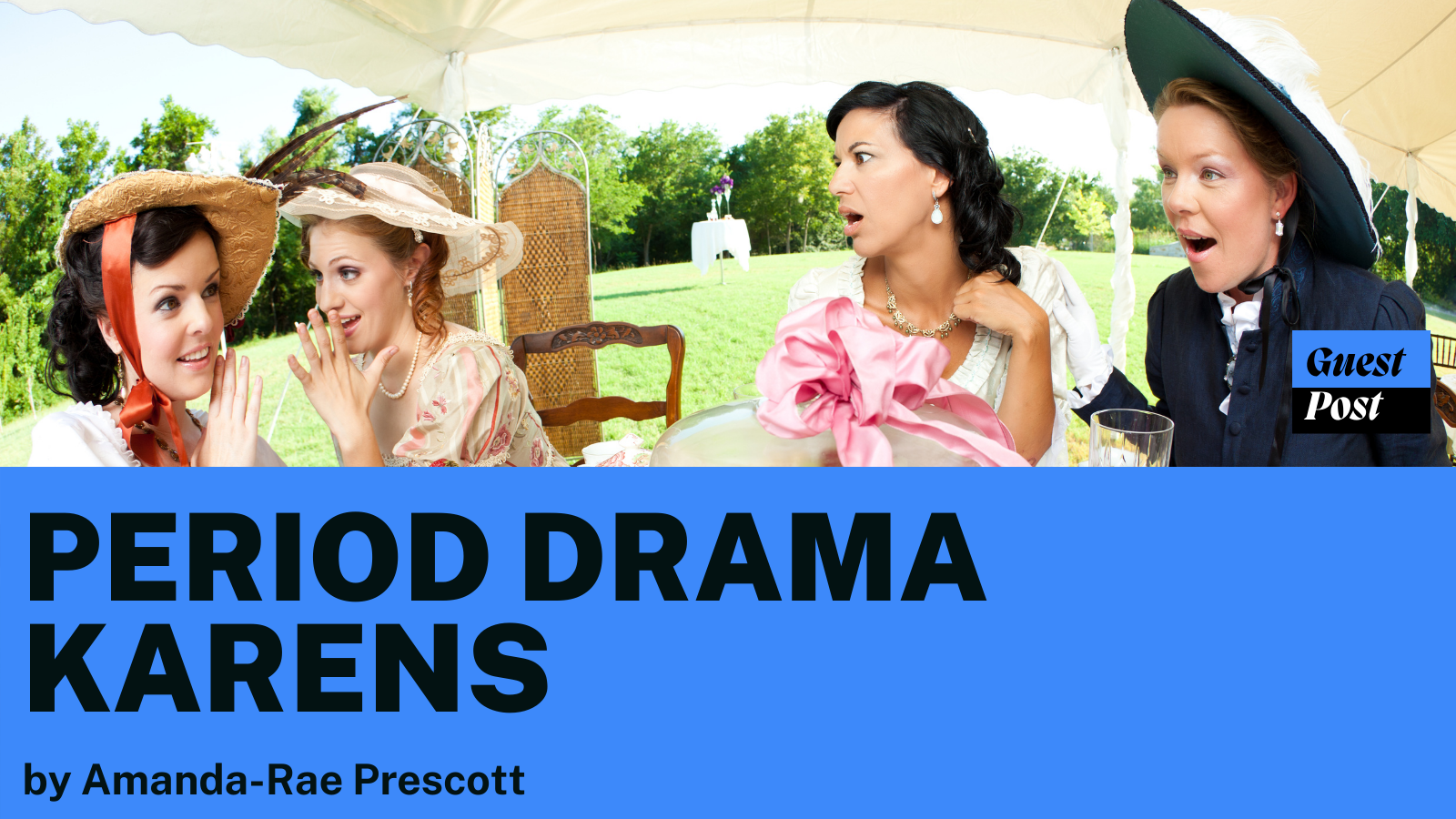
Hello Stitch’s Media Mix readers! My name is Amanda-Rae Prescott (she/her/hers) and I’m a Black and multiracial fan of period dramas, Doctor Who and other UK TV from New York City.
Racism in period drama fandoms can take many forms, but one form that’s very easy to spot are complaints from racists after new productions announce Black actors in traditionally white fictional character roles. Due to the success of Hamilton, Bridgerton, and other diverse-casted series, more production companies in the UK are adapting racebent or color-conscious casting. (Many of these series still have white writers and/or few Black people or other POC behind the camera, however, the UK entertainment industry is much further behind the US on this conversation for structural and population reasons.).
It’s easy for Black fans to miss these discussions online because these fandoms, with a few exceptions for mainstream fame, are outside traditional geek/nerd/fandom culture. There’s also an age gap to consider.
This is a strikingly honest description of culture war politics: create a brand that evokes negative feelings regardless of the details or merits of the case. In other words, the goal is to create a *bias* one that short-circuits reasoning and automates a political response. pic.twitter.com/YryY0adQ7z
Guess what racist fandom discourse accounts (and of course, their tokens of color) do to conversations about racism in fandom~
(literally it’s the same thing. they even use the same language – like woke as a pejorative, panic about censorship, Black people as villains – wow)
I know folks won’t “get” it but there are several points from 2017 to now where people across “transformative” fandom have tilted the needle HARD towards alt right ideology and language in the name of defending fandom specifically from BIPOC and folks just write it off as drama
But it’s not drama.
It’s racists manipulating marginalized white people’s fear of being harmed/silenced for their marginalization (which HAS happened) in order to turn them against BIPOC in fandom who are anti-racism to the point of inspiring long-term harassment campaigns.
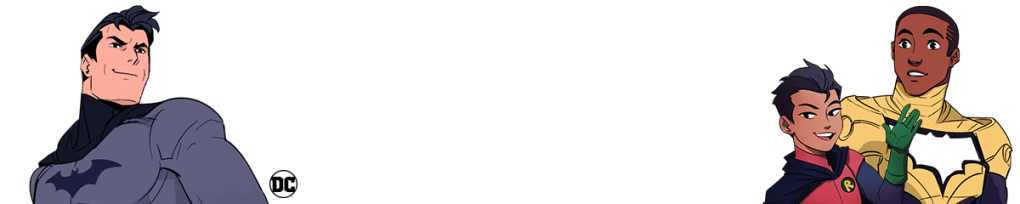
If you’ve seen me gush over Lezhin’s Painter of the Night, you’ll remember that I actually love webcomics. And as you all know, I fucking love DC Comics… especially the Batfamily. This latest comic – by artist StarBite and writer CRC Payne – taps into a lot of the slice-of-life content that the Batfandom I grew up with flat out adored.
I read the first six episodes (paying for the last three on Fast Pass) and I loved every moment of it. For the most part, this blends canon personalities/visuals with headcanons from fandom – one noted difference is that Duke is explicitly part of the Batfamily… something that modern (more modern?) fandoms still struggles to accept. It’s a very cute comic in the webcomic tradition, simple one-shot, family-oriented comics that reminds us that Batman doesn’t have sidekicks… he’s part of a whole Batfamily.
The characterization is largely solid (the fandom influence is obvious though) and it’s definitely far away from the way many of the dudes working on Batman across the decades have handled the Batfamily as a unit. I’m not necessarily concerned about the coloring, but Damian Wayne being relatively dark skinned is largely a fandom thing and if Talia and Ra’s aren’t dark skinned themselves, I will have questions. I loved having Cass and Stephanie back in the Batfamily in a way that’s super hard to ignore. I know they’re in the comics as of late, but it’s still super hard for me to get back into the comics I used to love… so I’ve been sticking to the outskirts of all of that… but this makes me want to try again to get back into the DC game.
Anyway, if you’re interested in checking out the comics for yourself, the first three episodes of the webtoon are up on well… Webtoon. And I’m interested in hearing your thoughts even if they’re critical!
It’s been over a year (this piece was originally supposed to go up in June 2021) since the Organization of Transformative Works’ Board of Directors, Chairs, and Leads released a statement of some solidarity with fans of color – particularly Black fans – in the wake of George Floyd’s murder and the worldwide protests against antiblackness, police brutality, and white supremacy that shifted the world on its axis back in 2020.
The OTW – and its “child”, the Archive of Our Own – has yet to make any meaningful inroads into making their segment of fandom accessible, welcoming, and safe for fans of color. In fact, racism done in the name of the Archive of Our Own specifically has increased to some extent with fans of color being subject to increased attacks including shunning, slander, and direct attacks on their fandom and offline reputations for going “perhaps this space could be… less racist”.
Seeing people recently kind of… gank “lil meow meow” for their fandom sexyman – almost always a white man with a background including somewhat horrific violence – has been wild. It’s a meme format that has recently picked up steam across the past few weeks on Tumblr and Twitter and has been used to “jokingly” refer to how people basically woobify a certain class of villains the way we do our cats.
The thing is? It actually has its roots in my primary fandom, BTS.
But you wouldn’t know that from all the people that insist on applying the meme to various Tumblr Sexymen like Loki and Kylo.


 Stitch's Media Mix
You must be logged in to post a comment.