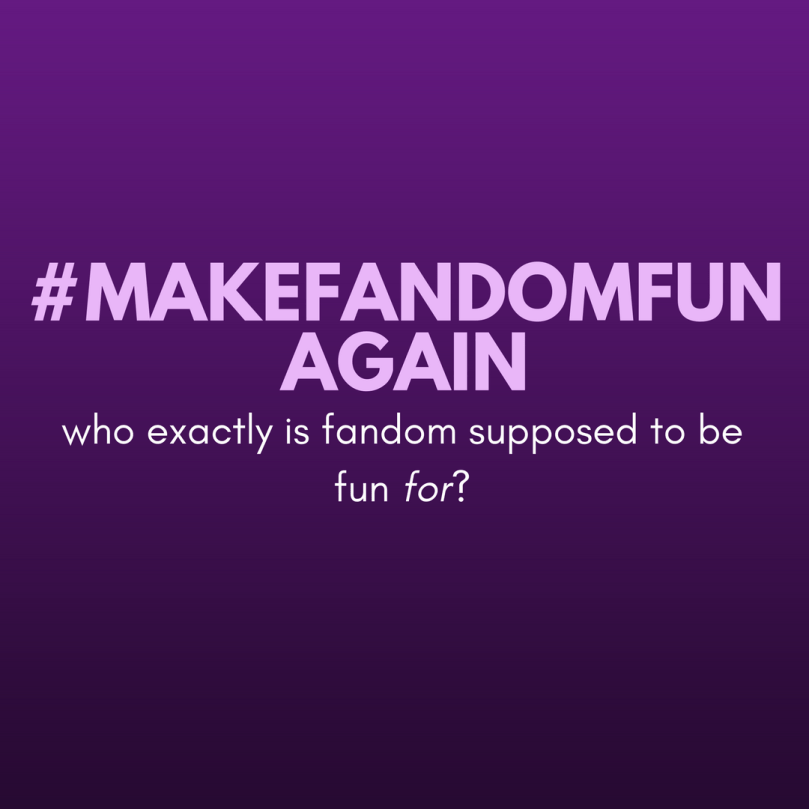
Some variation on the phrase “fandom is supposed to be fun” gets spouted like clockwork every single time that people of color in fandom try to talk about the way that fan spaces – predominantly slash fandom spaces – are frequently inhospitable to fans of color seeking more representation in their fan communities and downright disrespectful to characters of color in these slash-heavy fandoms.
Try talking about the way that characters of color are treated across the board in slash-filled fandom spaces sometime.
Try pointing out that while you like slash and have ID’d as a slasher for well over half of your life, sometimes it’d just be nice if characters that look like you weren’t either ignored or portrayed via racist stereotypes in slash fandom.
Try tagging any commentary that even remotely attempts to be critical of the reasons behind why fandom ships the ships they do.
Try it.
I dare you.
Watch how quickly a space that keeps being touted as a safe one for women quickly becomes unsafe. Watch how quickly your fellow fans treat you like an outsider and ignore any validity in your words because people like you are taking the fun out of fandom.
I agree with the basic sentiment, that fandom is supposed to be fun.
But I just wish that it actually was fun.
For everyone.
As a result of things I’ve seen and experiences I’ve had, I always find myself wondering: who’s fandom supposed to be fun for and why isn’t it fun for everyone?
Even the chilliest of observations of fandom that count as “fandom critical” are frequently met with rude and violent comments in our inboxes, snark from other people of color who just want to fit in, and people talking smack like it’s something they’re getting paid to do.
To point out that there is racism in fandom and that fandom does need to try a little harder to make its spaces more welcoming to people of color of all kinds is to wind up subjected to dehumanization from your fellow fans because the first rule of fandom apparently is “don’t mess up anyone’s fun or else”.
Why is it that our fellow fans constantly rant and rave about how they long for the “good ole days” of fandom and strive to #makefandomfunagain with some of the same dehumanizing tactics and language that certain political figures have used to refer to people of color and anti-racist activists offline.
Why is it that our fellow fans have decided that the main thing that makes fandom “un-fun” is other people being critical of it in any way?
Oh! And if you’re wondering what constitutes “un-fun” in fandom well… here’s a checklist for you:
- Talking about race in fandom? Un-fun.
- Talking about racism in fandom? Un-fun.
- Pointing out that slash fandom spaces/fans constantly center white dudes? Un-fun.
- Writing about characters of color with fandom’s favorite white dude? Un-fun.
- Being vocally and visibly both a person of color and socially aware (or “woke”) in fandom? Un-fun.
Essentially, if you’re a person of color in fandom spaces (any kind of fandom space, true, but primarily slash-filled fandom spaces), by asking your fellow fans to respect and acknowledge what it means to be a person of color in fandom and what it means to like characters of color in fandom, you’re not fun…
And you apparently don’t deserve to have any fun in fandom as a result.


 Stitch's Media Mix
You must be logged in to post a comment.